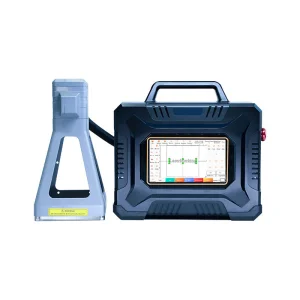
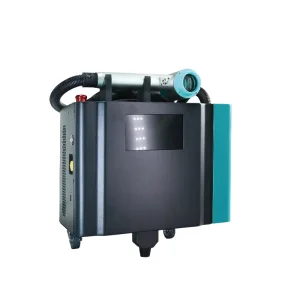
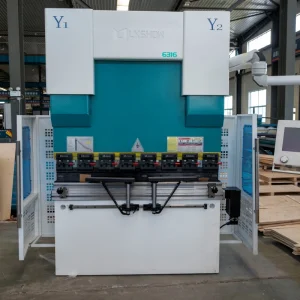
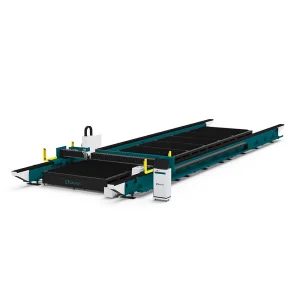
Explore our industrial-grade fiber laser cutters, high-capacity tube processing machinery, and advanced CNC bending lines.
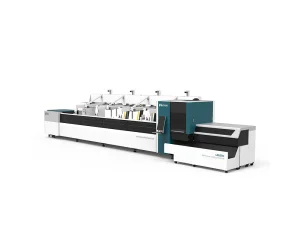
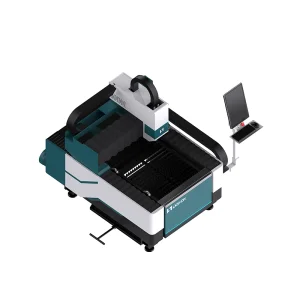
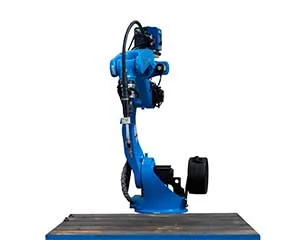
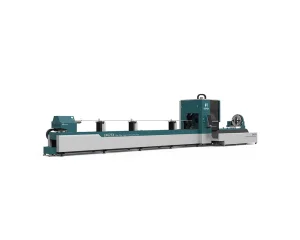
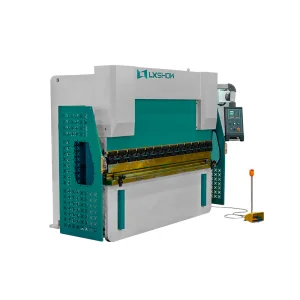
In the modern era of high-precision manufacturing, custom CNC laser cut metal components constitute the fundamental structural core of global technology sectors. From high-integrity aerospace structural elements and automotive chassis sub-assemblies to complex integrated circuit enclosures, the demand for precision cutting has shifted exponentially toward fiber laser systems.
Historically, sheet metal fabrication relied on legacy mechanical stamping, turret punching, and CO2 laser cutters. However, the paradigm shifted with the commercialization of high-kilowatt fiber lasers (ranging from 1kW up to 30kW and beyond). Fiber lasers emit light at a wavelength of approximately 1.06 micrometers, allowing them to be absorbed up to three times more efficiently by metallic substrates compared to CO2 lasers (operating at 10.6 micrometers). This breakthrough has enabled manufacturers to execute ultra-fast cutting of complex geometries with high material yields, minimal Heat-Affected Zones (HAZ), and extreme dimensional accuracy of within ±0.05 mm.
Today's international supply chains require components that not only meet stringent dimensional specifications but also strict metallurgical standards. When raw stock materials such as structural carbon steel, copper, or medical-grade stainless steel are processed by advanced multi-chuck CNC laser systems, the chemical profile and structural integrity of the edge remain unaltered. This preserves downstream welding performance, structural load tolerances, and surface finishing outcomes.
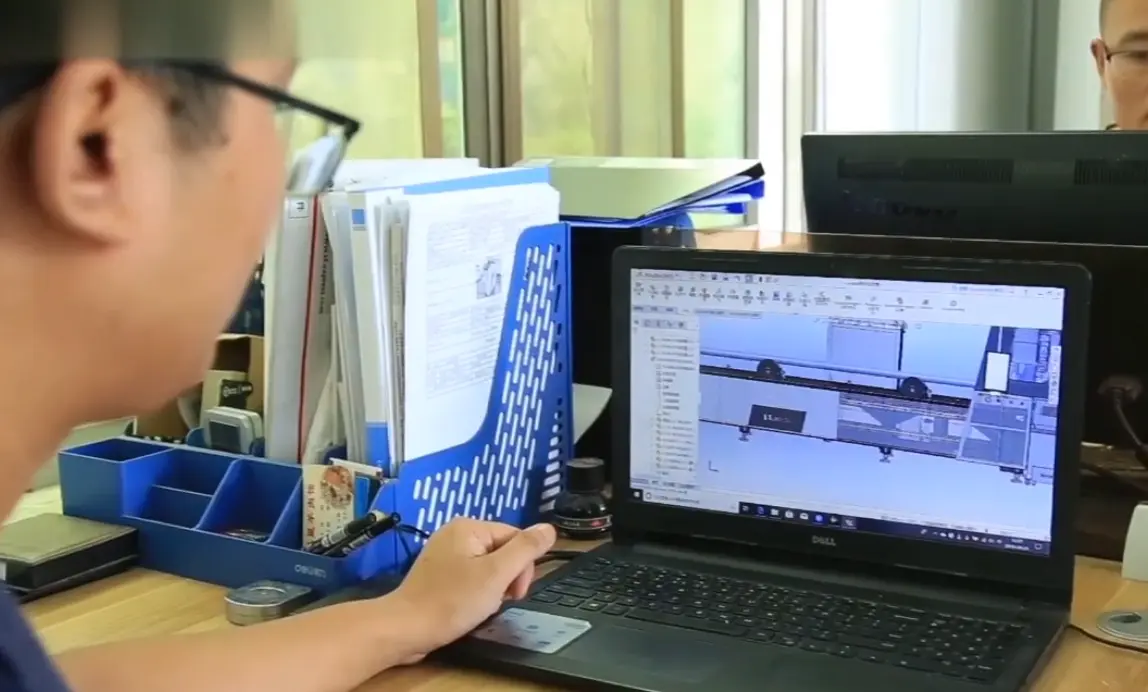
China's rise as a dominant supplier of precision CNC laser cutting and fabrication machinery is anchored in comprehensive industrial supply chain clusters and high manufacturing efficiencies. Unlike localized fabrication shops in North America or Western Europe, integrated Chinese manufacturers leverage direct access to bulk domestic steel production, in-house mechanical design departments, and highly optimized tooling ecosystems.
Direct proximity to key metallurgy hubs reduces material transport costs and guarantees immediate raw plate availability, accelerating overall manufacturing times.
From automated sheet loaders to multi-chuck heavy-duty rotary tube cutters, Chinese factories minimize manual intervention to ensure batch consistency and competitive pricing.
Our products undergo rigorous testing protocols to comply with European Union CE standards, American FDA regulations, and ISO 9001 quality management benchmarks.
These advantages enable Chinese manufacturers to deliver bespoke OEM/ODM metal products at a lower total cost of ownership (TCO) than regional suppliers elsewhere. Additionally, the rapid integration of high-performance CAD/CAM nesting algorithms ensures that sheet utilization is maximized, lowering waste to under 8%. This directly reduces the unit cost of custom metal panels, flanges, brackets, and structural components.
The versatility of high-power fiber laser systems allows them to process various metals with varying structural requirements. Here is a breakdown of how key industries apply these components:
1. Aerospace & Defense: Laser cutting plays a crucial role in creating lightweight brackets, airframe reinforcement plates, and combustion chamber shielding from nickel alloys and titanium. These applications demand high precision and structural integrity, requiring clean, micro-crack-free cutting edges.
2. Automotive & Transport: From chassis structural rails and body panels to exhaust manifolds, laser systems deliver the speed and cost-efficiency required for just-in-time (JIT) production lines.
3. Electronics & Semiconductors: As electronics miniaturize, high-speed fiber lasers cut copper lead frames, micro-enclosures, and high-frequency shielding panels with clean edges and zero distortion.
4. Industrial Machinery & Mold Making: Large-format ground rail laser cutters process thick steel plates (20mm - 50mm+) to build heavy equipment beds, structural pillars, and high-load machinery bases.
A technical overview of material processing capabilities across various laser power levels and equipment configurations.
| Laser Source Power | Material Type | Max Cutting Thickness | Assist Gas Type | Tolerance Standard |
|---|---|---|---|---|
| 1,000W - 2,000W Fiber | Stainless Steel / Carbon Steel | 12 mm / 16 mm | Nitrogen / Oxygen | ± 0.05 mm |
| 3,000W - 4,000W Fiber | Stainless Steel / Carbon Steel / Aluminum | 20 mm / 22 mm / 12 mm | Nitrogen / Oxygen / Air | ± 0.04 mm |
| 6,000W - 8,000W Fiber | Stainless Steel / Carbon Steel / Copper | 25 mm / 30 mm / 16 mm | Nitrogen / Oxygen / Air | ± 0.03 mm |
| 12,000W - 30,000W Fiber | Heavy-Duty Structural Plates (All Metals) | 50 mm - 100 mm | High-Pressure Nitrogen / Oxygen | ± 0.05 mm |
The metal processing sector is undergoing an digital transformation driven by three core technology trends:
I. Artificial Intelligence & Adaptive Nesting: Real-time CAD parsing algorithms now automatically optimize sheet metal nesting layouts to reduce scrap. Intelligent software also controls laser head standoff distance dynamically, adapting to uneven metal plates during high-speed cutting runs to prevent collisions.
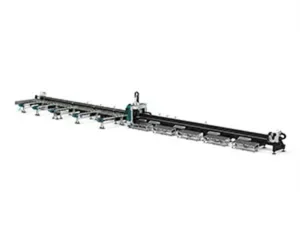
II. Multi-Chuck Heavy-Duty Tubing Systems: The introduction of three-chuck and four-chuck tube processing systems allows for zero-tailing cutting of large steel tubes and structural channels. This significantly lowers raw material waste while increasing processing speeds.
III. Clean Green Manufacturing: Fiber laser systems are increasingly configured with air-assist setups, reducing reliance on expensive industrial oxygen and nitrogen. High-efficiency fume extractors and dust filtration systems also help factories maintain compliance with environmental regulations.
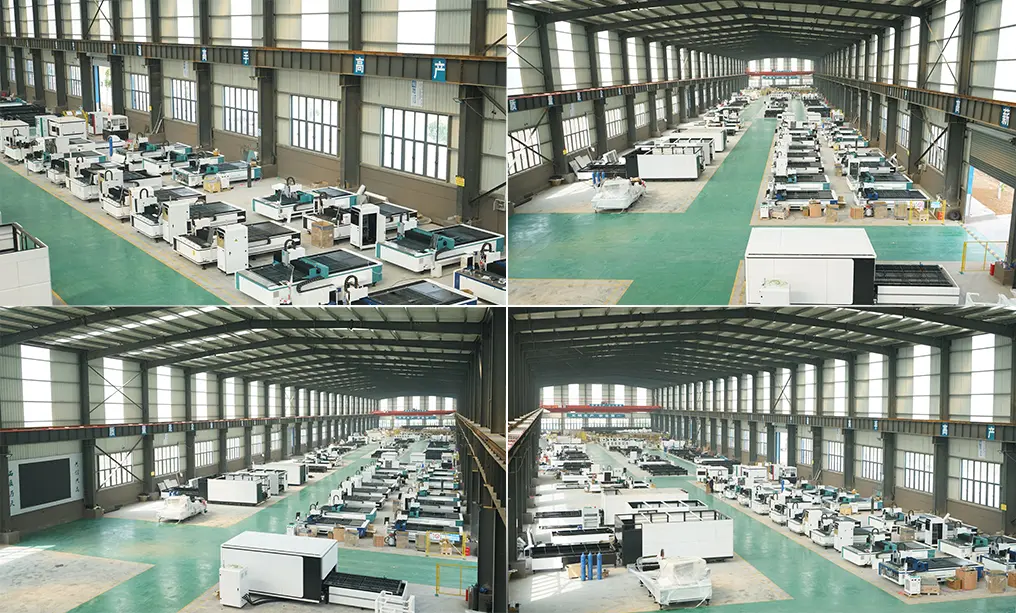
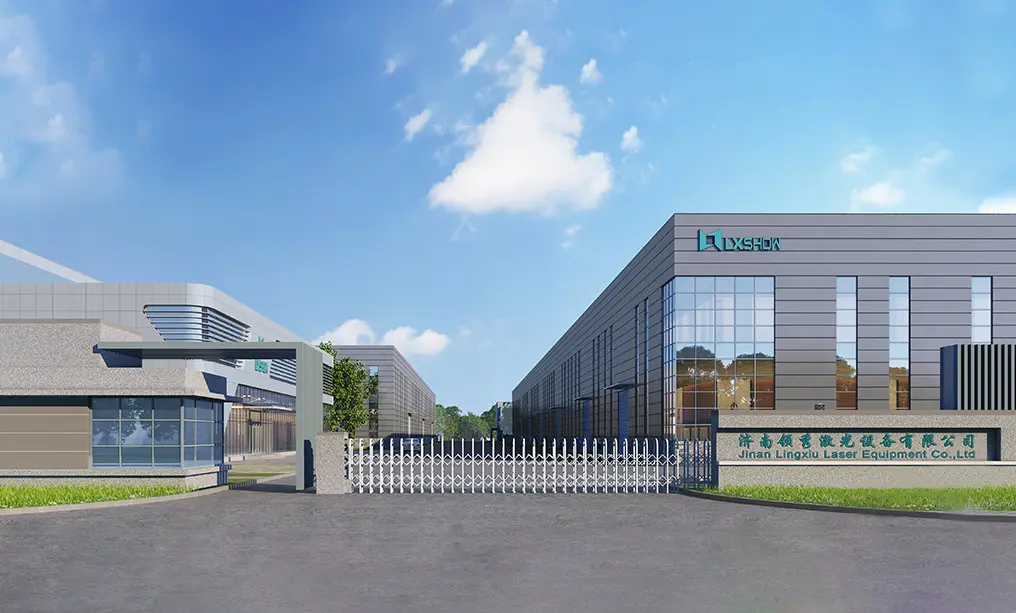
Established in July 2004, LXSHOW Group has grown into a key manufacturer and exporter of smart laser machinery and sheet metal processing equipment. Headquartered in Jinan, China, the company operates an R&D and office footprint exceeding 500 square meters, backed by an advanced 32,000 square meter production facility.
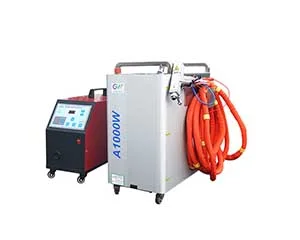
Our core product line includes high-power fiber laser cutting machines, laser welding systems, and laser cleaning machines. Every piece of equipment undergoes rigorous testing to meet international regulatory standards, holding European Union CE certification, American FDA registration, and ISO 9001 quality management system certification.
With a focus on providing reliable technical support, we operate a dedicated Laser Application and Training Center. Our goal is to help companies transitions toward Industry 4.0 smart manufacturing. LXSHOW currently supplies custom OEM and ODM services to more than 30 global brands, with systems running reliably across the United States, Canada, Australia, Europe, Southeast Asia, and Africa.
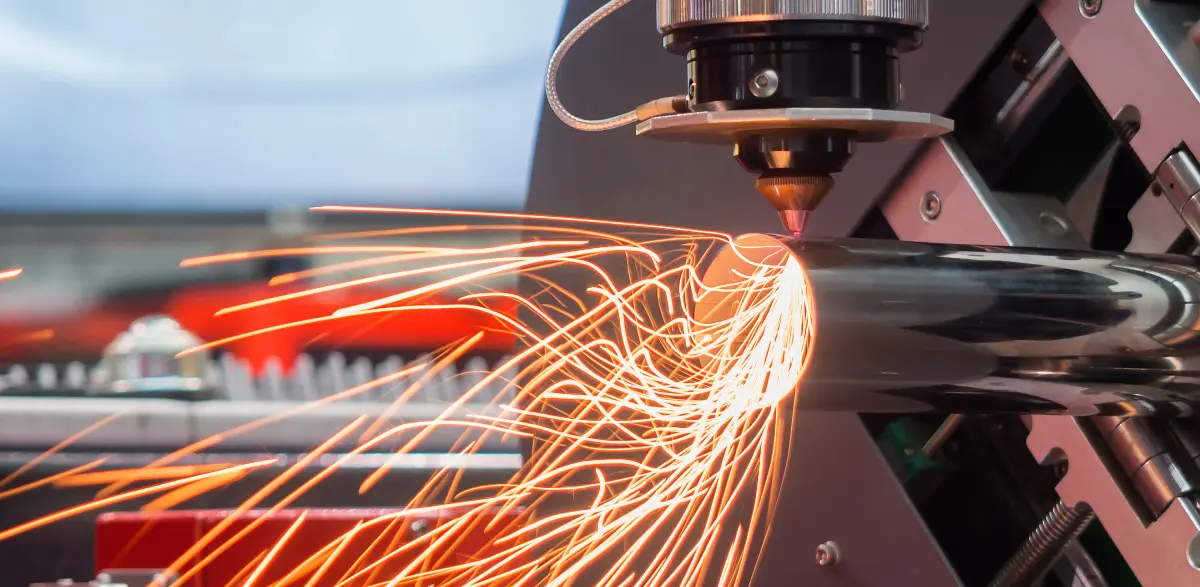
Expert advice on selecting materials, optimizing tolerances, and managing quality control for custom metal fabrication projects.
Fiber lasers are highly efficient when cutting metal due to their 1.06µm wavelength, which is absorbed more readily by metals. They cut thin to medium sheets up to three times faster than CO2 lasers, consume less electrical power, and require fewer consumables. This lowers operating costs for manufacturers.
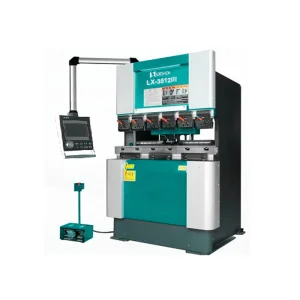
Our standard production machines achieve cutting positioning tolerances of ±0.03 mm to ±0.05 mm, depending on material thickness and sheet quality. Bending operations run on our CNC servo bending lines hold positioning tolerances within ±0.1 mm, ensuring consistent quality for high-volume orders.
We use Nitrogen (N2) or compressed air to cut stainless steel to prevent oxidation and keep the cutting edge clean and shiny. For carbon steel, we typically use Oxygen (O2) to support the combustion process, allowing us to cut thicker plates at stable speeds.
Yes. All LXSHOW fiber laser cutting, welding, and cleaning machines are certified to meet European Union CE directives, hold registered FDA credentials for the United States market, and are built under ISO 9001 certified quality management protocols.
We provide remote technical support via our Global Communication Center, including video tutorials and detailed system guides. Additionally, our field service engineers are available for on-site commissioning and training programs globally.
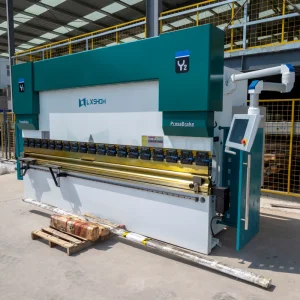
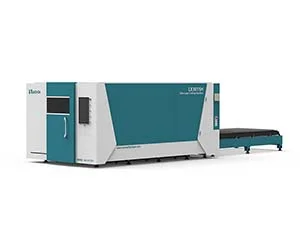
Review our specialized high-speed pipe cutting, electro-hydraulic bending, and heavy-duty sheet processing machinery.
 Lxshow