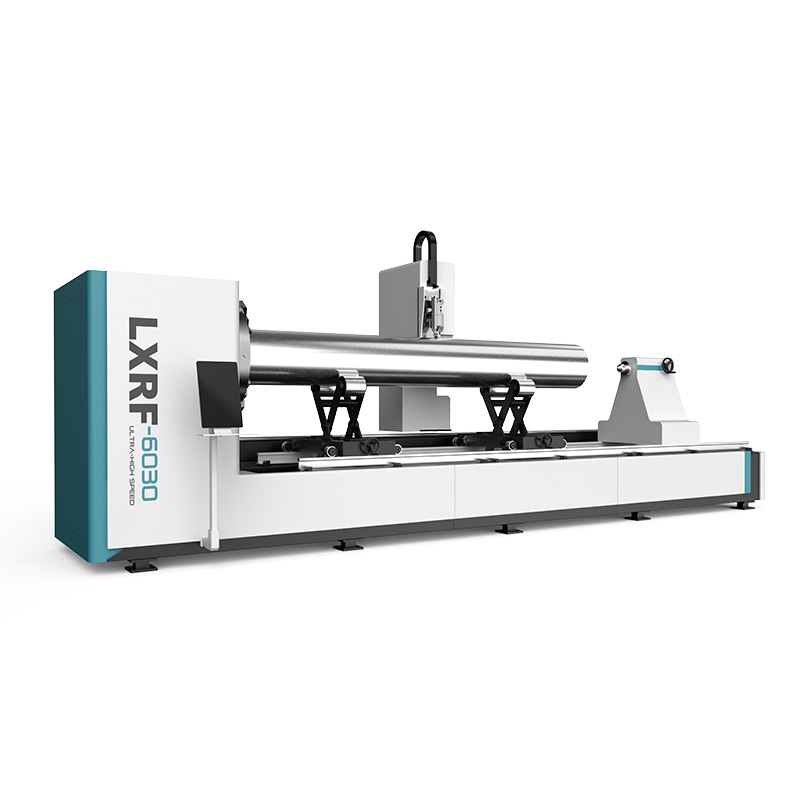
Wholesale LXRF-6030 The most popular laser cladding single axis positioner module made in China Supplier, Suppliers

Product Description

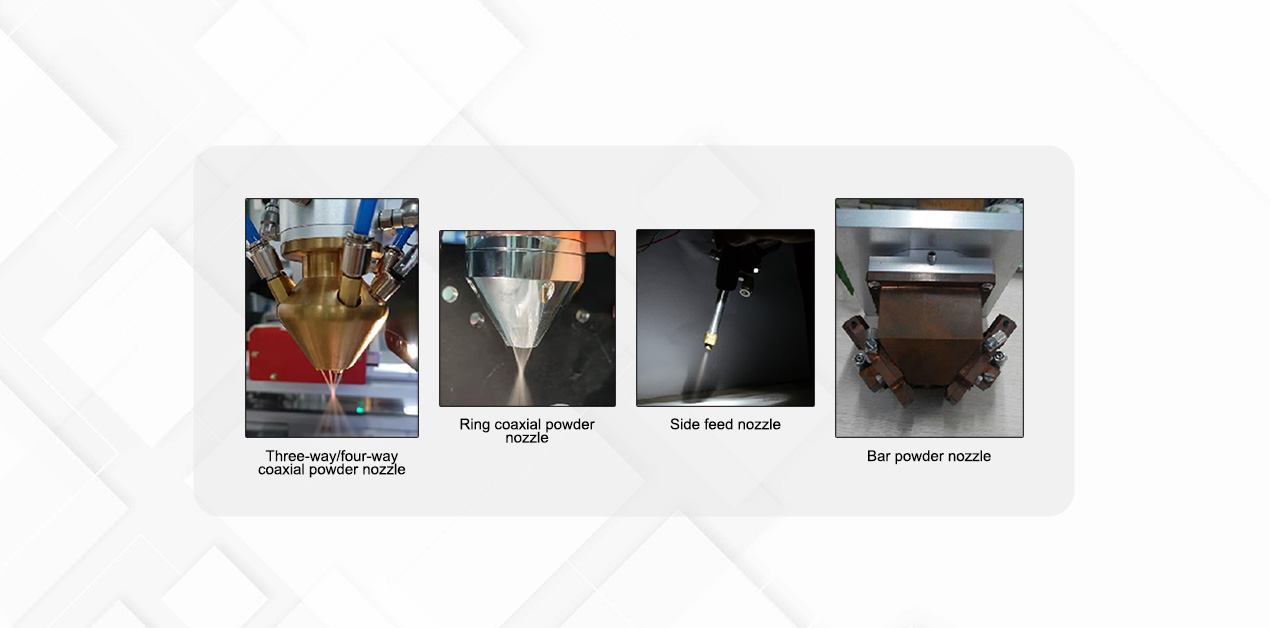
Coaxial powder feeding nozzle types
1. Three-way/four-way coaxial powder feeding nozzle

The powder is directly output from the three-way/four-way, converged at one point, the convergence point is small, the powder direction is less affected by gravity, and the directionality is good, suitable for three-dimensional laser Restoration and 3D printing.

2. Annular coaxial powder feeding nozzle

The powder is input by three or four channels, and after internal homogenization treatment, the powder is output in a ring and converges. The convergence point is relatively large, but more uniform, and is more suitable for laser melting with large spots. It is suitable for laser cladding with an inclination angle within 30°.

3. Side powder feeding nozzle

Simple structure, low cost, convenient installation and adjustment; the distance between powder outlets is far, and the controllability of powder and light is better. However, the laser beam and powder input are asymmetrical, and the scanning direction is limited, so it cannot generate a uniform cladding layer in any direction, so it is not suitable for 3D cladding.

4. Bar-shaped powder feeding nozzle

Powder input on both sides, after homogenization treatment by the powder output module, output bar-shaped powder, and gather at one place to form a 16mm*3mm (customizable) strip-shaped powder spot, and the corresponding The combination of strip-shaped spots can realize large-format laser surface repair and greatly improve efficiency.
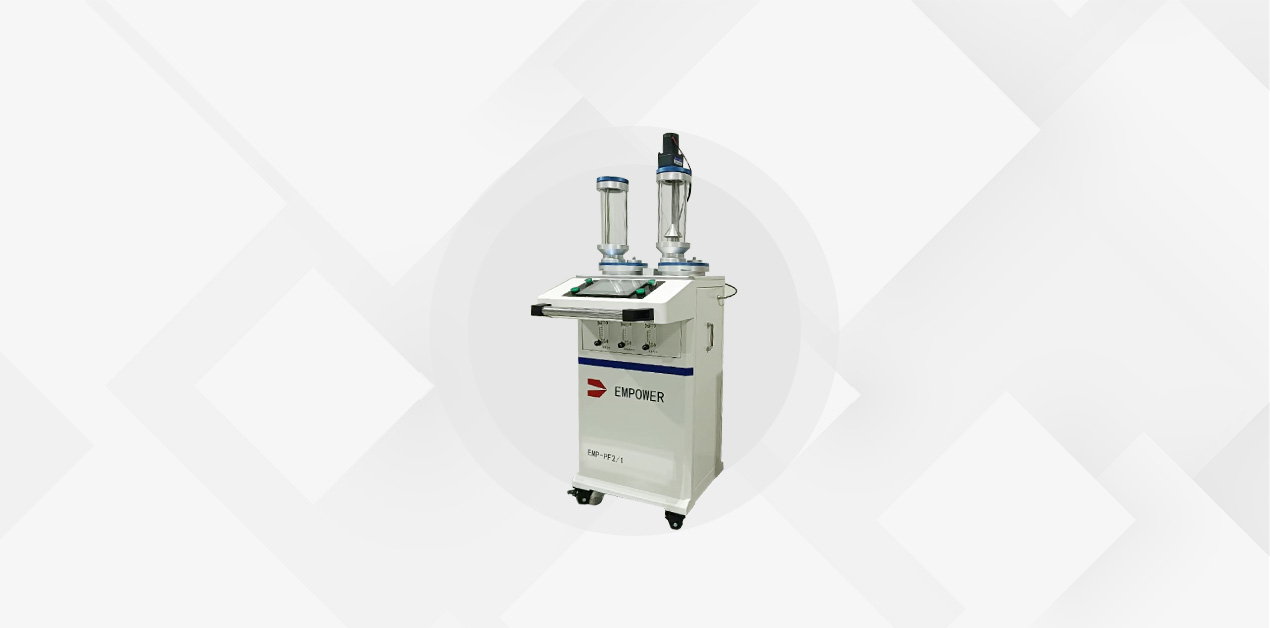
Double Barrel Powder Feeder Main Parameters
Double barrel powder feeder system
Parameter Description Specifications Details
Powder feeder model EMP-PF-2-1
Powder feeding cylinder dual-cylinder powder feeding, PLC independent controllable
Control mode fast switch between debugging and production mode
Dimensions 600mmX500mmX1450mm (length, width and height)
Voltage 220VAC, 50HZ;
Power ≤1kw
Sendable powder particle size 20-200μm
Powder feeding disc speed 0-20 rpm stepless speed regulation;
Powder feeding repeat accuracy <±2%;
Required gas source Nitrogen/Argon
Others The operation interface can be customized according to requirements
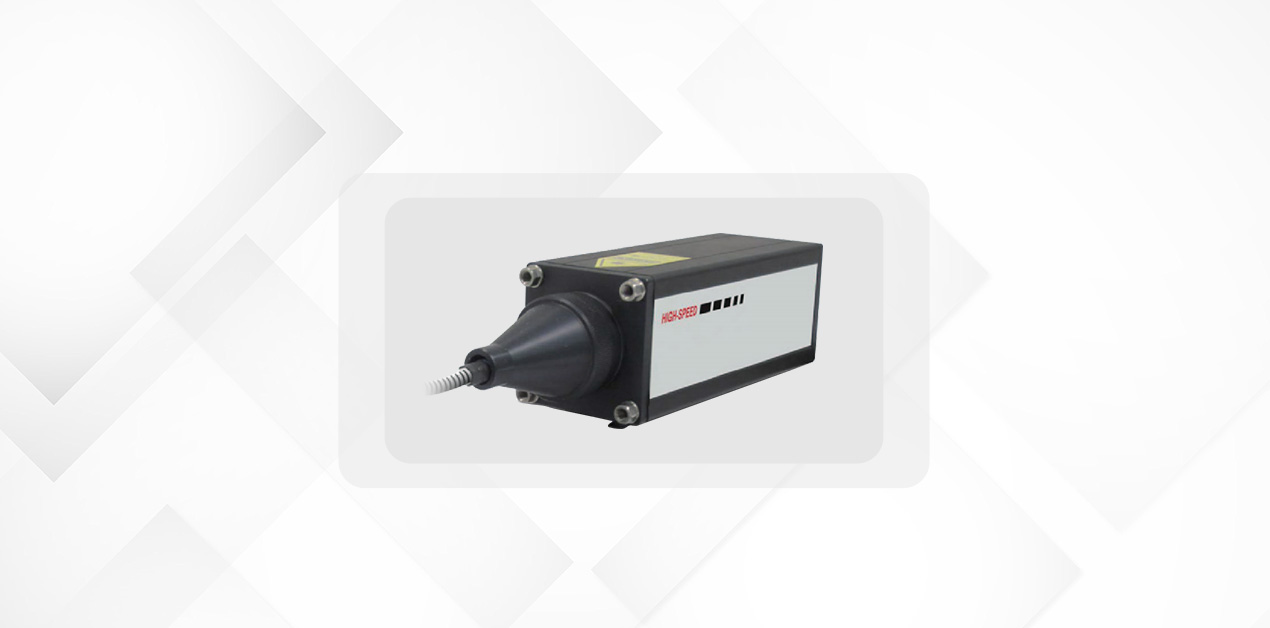
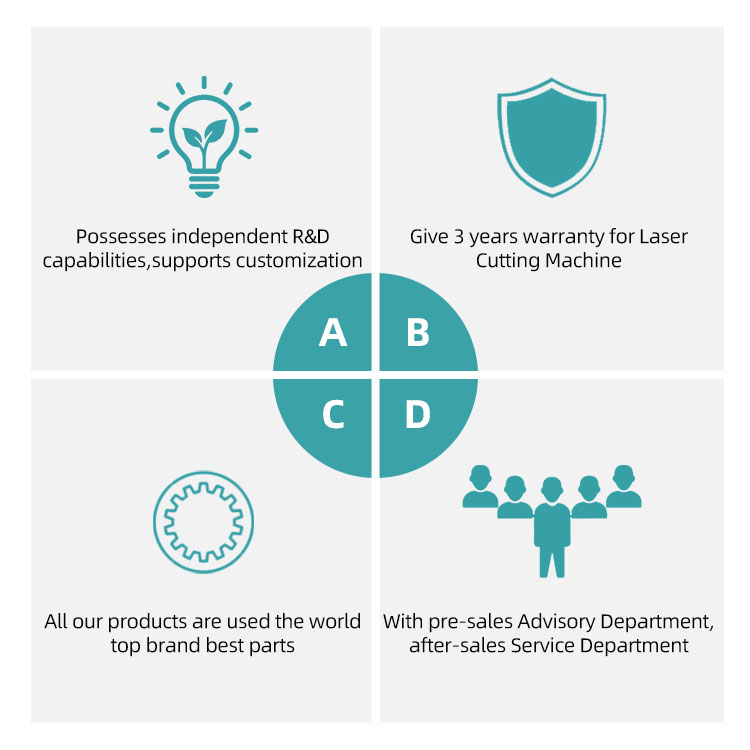
Closed-Loop Temperature Control & Process Control
Closed loop temperature control unit
  • Closed-loop temperature control, such as laser quenching, cladding and surface treatment, can accurately maintain the hardening temperature of edges, protrusions or holes.
  • The test temperature range is from 700℃ to 2500℃.
  • Closed-loop control, up to 10kHz.
  • Powerful software packages for process setup, visualization, and data storage.
  • Industrial l/O terminals with 24V digital and analog 0-10V l/O for automation line integration and laser connection.
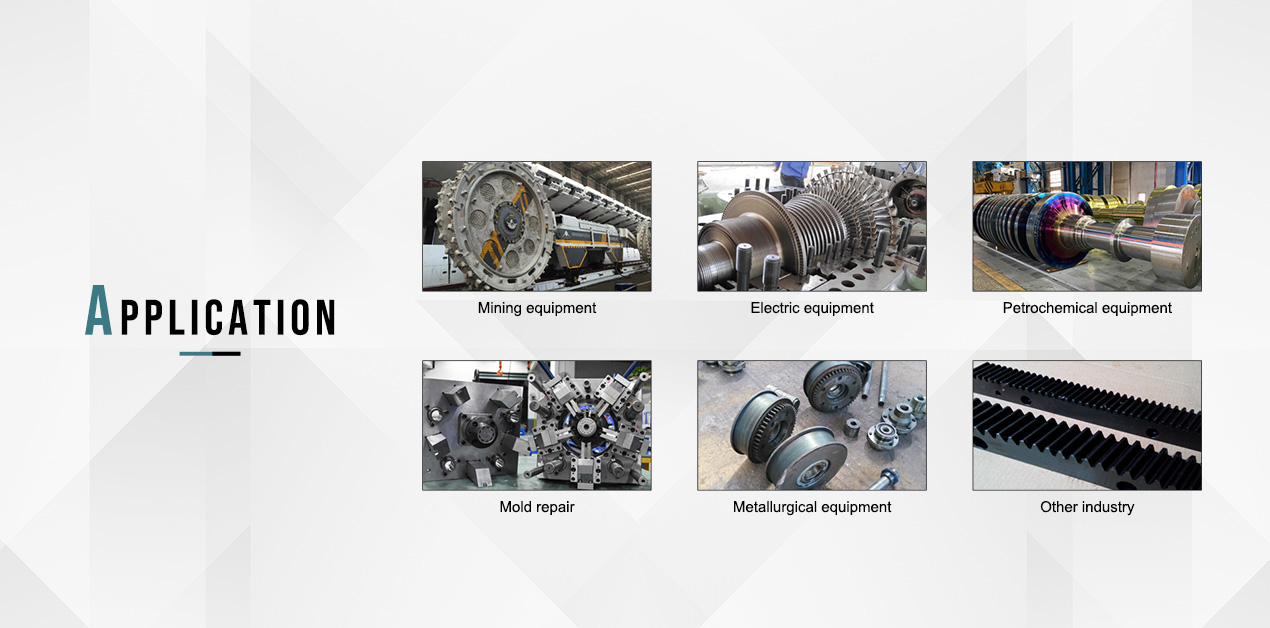
Laser Cladding Industry Applications
Laser cladding application sample
Laser cladding processing specimen
  • Automotive Industry: Engine valves, cylinder grooves, gears, exhaust valve seats, and components demanding high wear, heat, and corrosion resistance.
  • Aerospace Industry: Cladding alloy powders onto titanium surfaces to address structural friction coefficient and wear-resistance limitations.
  • Mold Industry: Surface hardening post-cladding, offering substantial improvements to wear, temperature, and surface hardness profiles.
  • Steel Industry: Roll repair and surface enhancement applications have become heavily integrated and standardized.
Working Principle of Laser Cladding

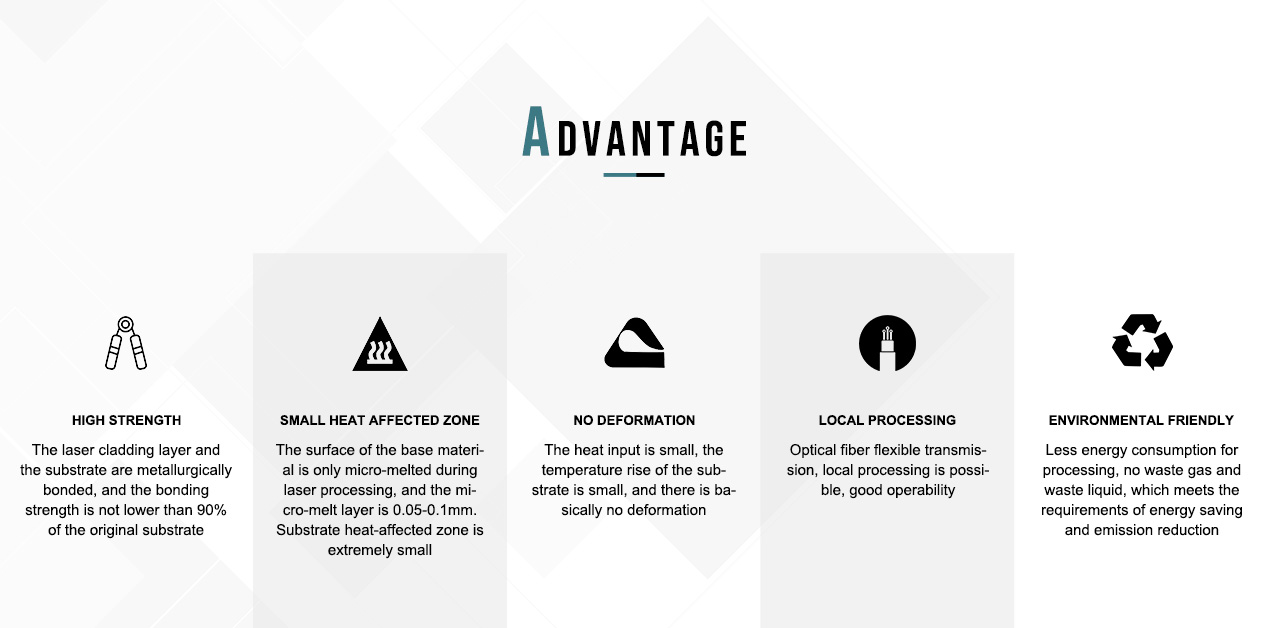
By adding cladding materials on the surface of the substrate and using a high-energy-density laser beam to fuse it together with the thin layer on the substrate surface, a metallurgically bonded cladding layer is formed on the surface of the substrate.
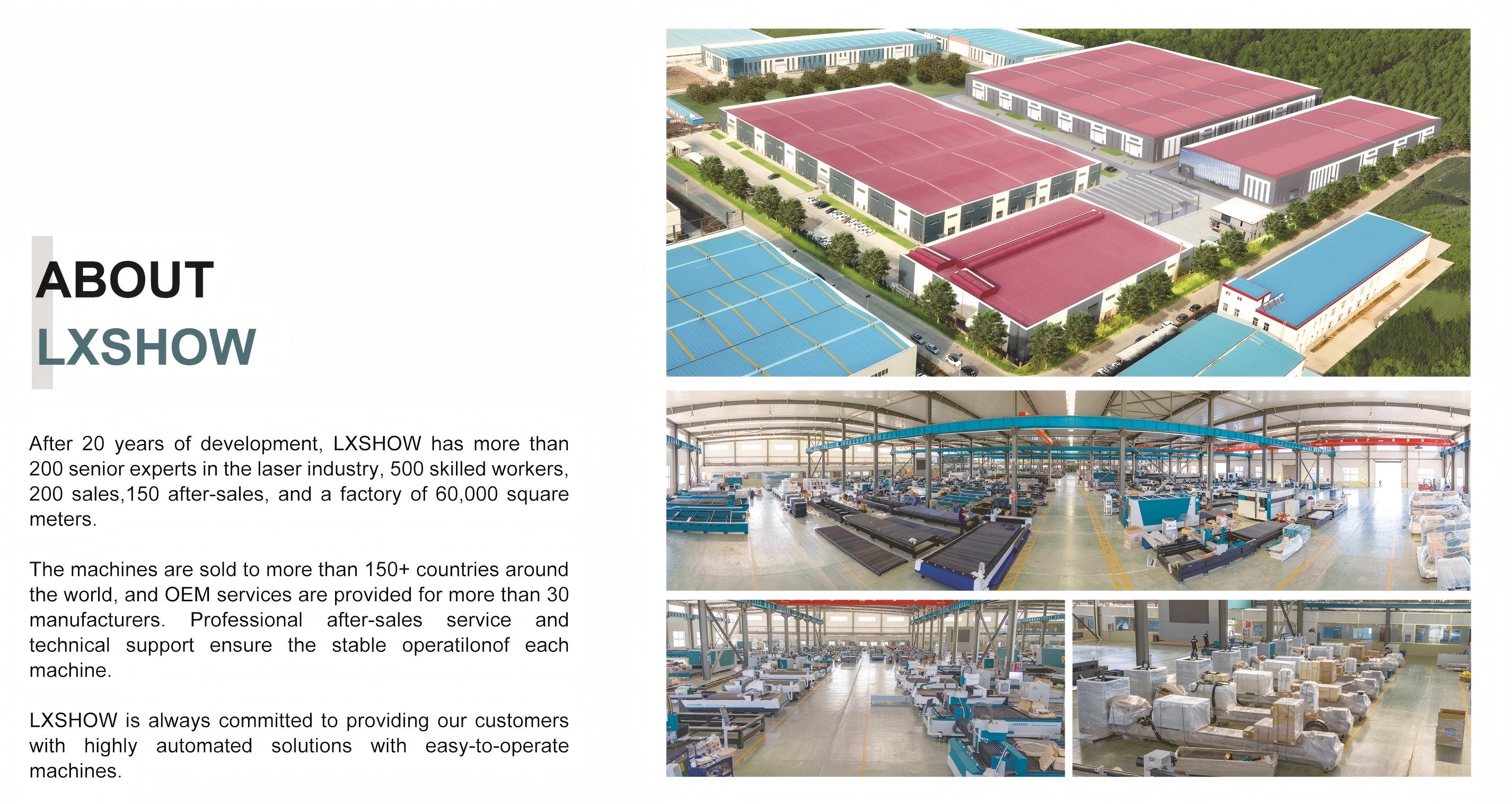
Laser cladding machinery production line
Factory Workstation
Laser machinery technical service support
Our Service Support
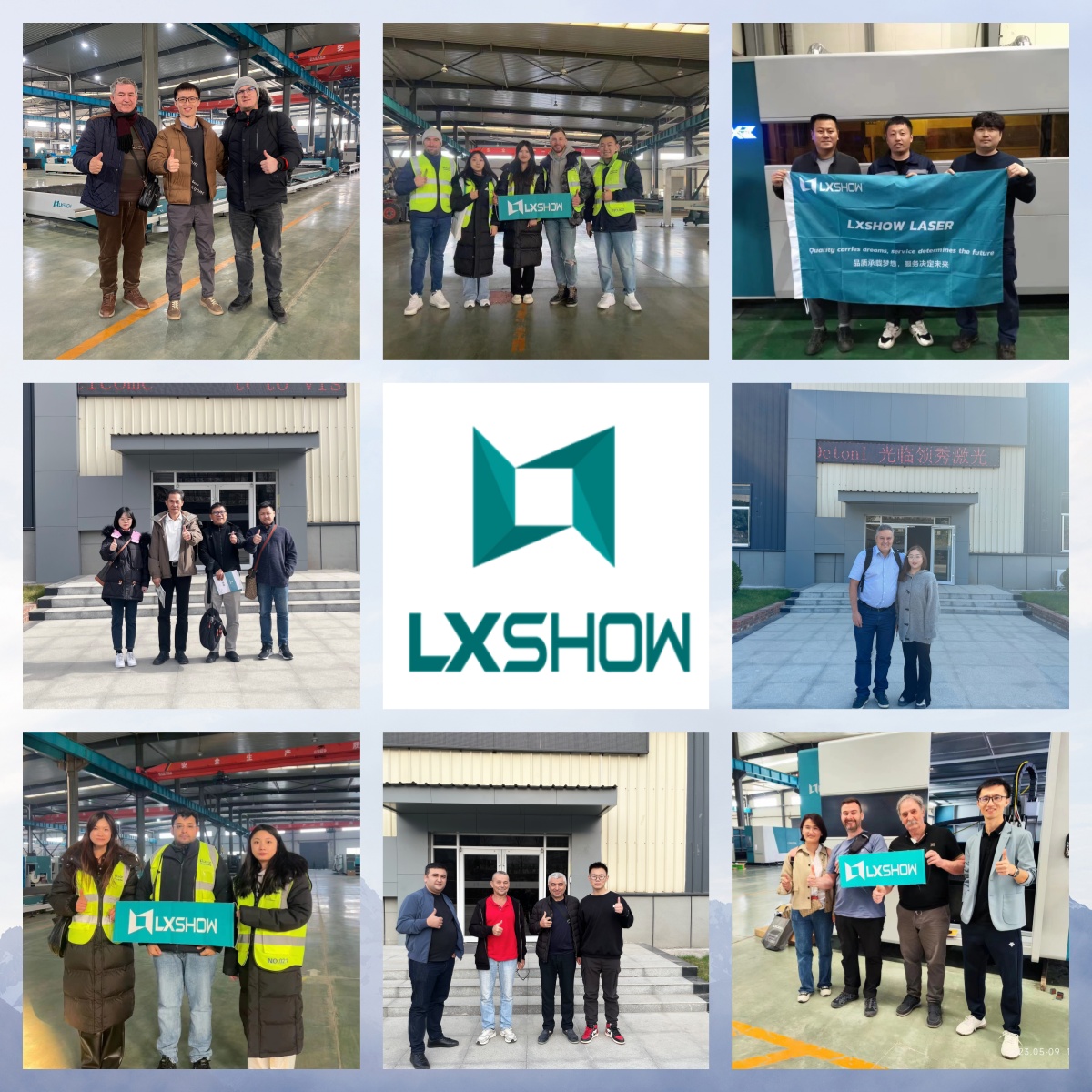
Clients inspecting laser equipment
Customer Visit
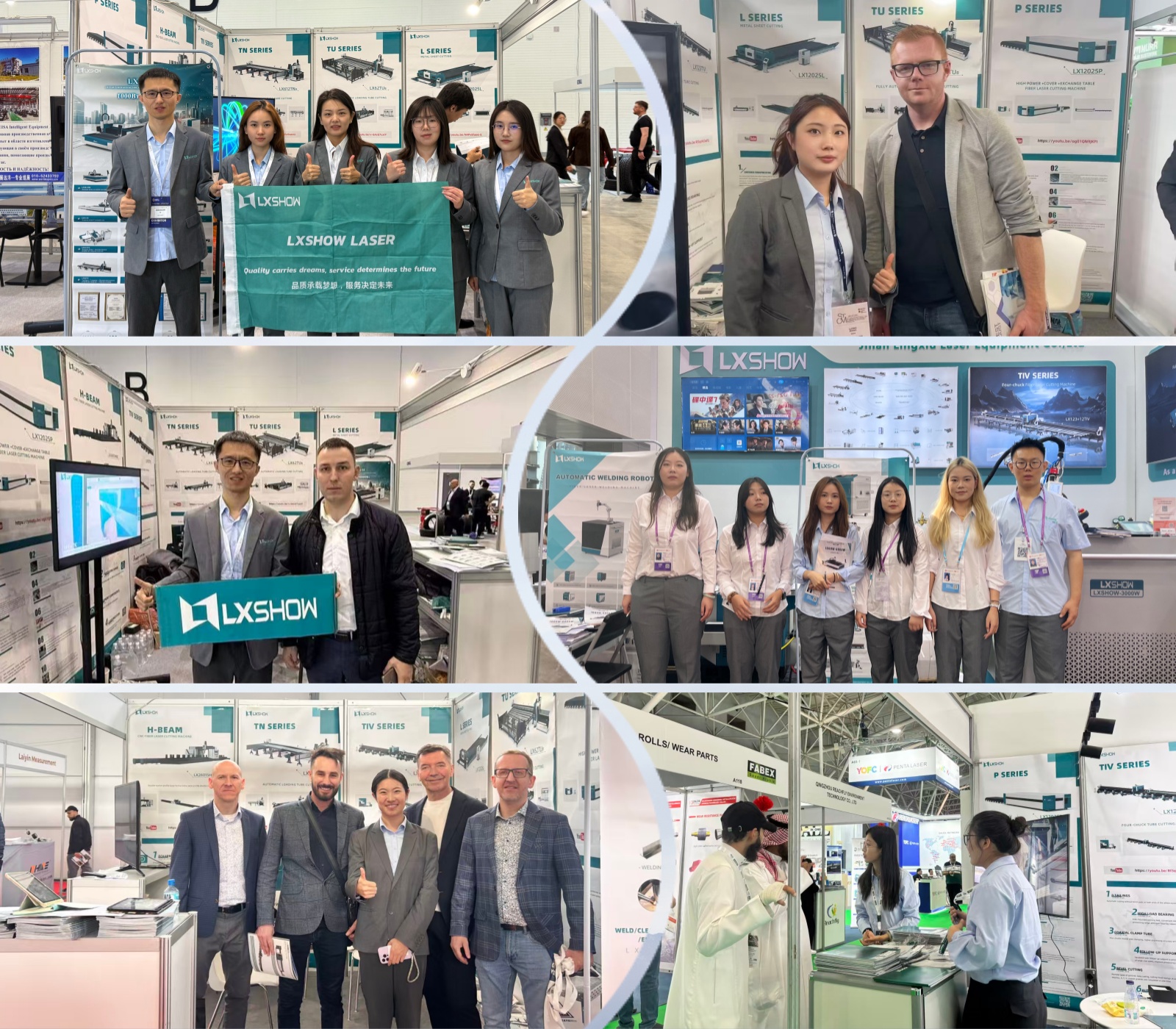
Offline industrial machinery exhibition
Off-line Activity
We Need to Know

If you want to know whether laser cladding is suitable for you, you need to tell the following points:
01
What material is your product; what material needs cladding;
02
The shape and size of the product, it is best to provide photos;
03
Your specific processing requirements: processing position, width, thickness, and product performance after processing;
04
Need processing efficiency;
05
What is the cost requirement?
06
The type of laser (optical fiber or semiconductor), how much power, and the desired focus size; whether it is a supporting robot or a machine tool;
07
Are you familiar with the laser cladding process and do you need technical support;
08
Is there any precise requirement for the weight of the laser cladding head (especially the load of the robot should be considered when supporting the robot);
09
What is the delivery time requirement?
10
Do you need proofing (support proofing)
Laser cladding test result
Frequently Asked Questions (FAQ)
What is the working principle of laser cladding?
Laser cladding works by adding cladding materials on the surface of the substrate. Using a high-energy-density laser beam, it fuses the material together with a thin layer of the substrate surface to form a strong metallurgically bonded cladding layer.
How do I choose between different powder feeding nozzles?
Selection depends on your application: Three-way/four-way coaxial nozzles are ideal for 3D printing and 3D restoration; annular coaxial nozzles are better for larger, uniform spots and flat/inclined cladding within 30°; side powder feeding offers easy adjustments for 2D settings; while bar-shaped nozzles are optimized for large-format surface repairs.
What are the technical specs of the double barrel powder feeder?
The double barrel powder feeder (Model EMP-PF-2-1) features dual-cylinders with independent PLC control, dimensions of 600mm x 500mm x 1450mm, and compatibility with particle sizes from 20 to 200μm. It runs on a 220VAC power source and achieves a powder feeding repeat accuracy of <±2%.
Why is closed-loop temperature control important in laser cladding?
Closed-loop temperature control allows you to maintain exact hardening temperatures (ranging from 700℃ to 2500℃) on critical areas like edges, protrusions, or holes. With responsive control up to 10kHz, it ensures process stability, structural integrity, and automation line integration via digital/analog I/O.
Which industries commonly implement laser cladding technology?
Laser cladding is widely utilized in the automotive sector (engine valves, cylinder grooves), aerospace (titanium alloy surfaces), mold manufacturing (to improve surface hardness and wear resistance), and the steel industry (roll repair).
What details should I provide to check if laser cladding fits my requirements?
You need to identify the product and cladding materials, product shape/size (photos are helpful), processing requirements (position, width, thickness), efficiency targets, laser source specs (power, type, focus), and weight limitations for the cladding head.

Related Products