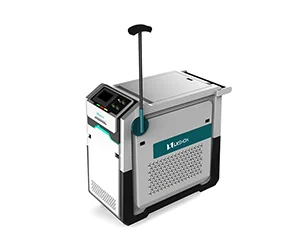
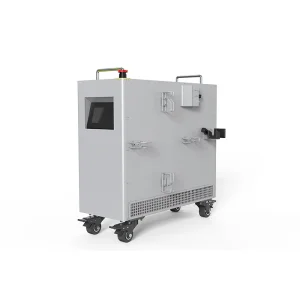
Engineered for compliance with local AS/NZS welding standards, delivering superior thermal efficiency and minimal heat-affected zones.
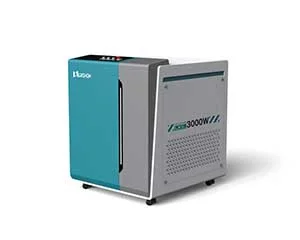
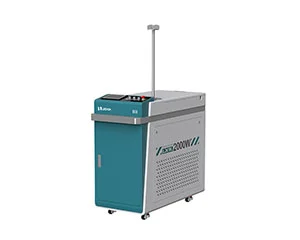
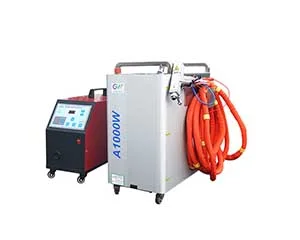
Why modern fabricators in Auckland, Wellington, and Christchurch are transitioning to high-efficiency fiber laser welding technologies.
The manufacturing sector in New Zealand, particularly across the food processing, dairy, marine, and agricultural machinery industries, faces unique challenges. With high local labor costs, a shortage of certified specialized welders, and geographic logistics hurdles, maintaining productivity is vital. Traditional TIG and MIG welding, while reliable, require extensive post-weld processing (such as grinding, pickling, and polishing), especially when dealing with hygienic stainless steels used in dairy vats or marine-grade aluminum structures.
Fiber laser welding technology presents a breakthrough solution. By concentrating energy into a highly focused coherent beam, laser welding ensures deep weld penetration at speeds up to ten times faster than conventional methods. Crucially, the localized heat input dramatically minimizes thermal distortion. This helps Kiwi workshops eliminate the need for secondary straightening and finishing steps—slashing total production cycles and delivering immediate operational cost savings.
Our industrial laser welding units are calibrated to satisfy the requirements of structural and hygienic stainless steel welding standards, maintaining structural integrity without compromising metallurgy.
Equipped with class-leading safety features, including contact-detection interlocks, dual-channel safety relays, and active laser safety glasses to comply fully with AS/NZS IEC 60825 safety protocols.
Featuring state-of-the-art fiber resonators (up to 35% electro-optical conversion efficiency), reducing power draws significantly compared to older welding equipment and CO2 laser systems.
Quantitative analysis illustrating the productivity gains, quality parameters, and economic advantages of laser technology.
| Performance Indicator | Fiber Laser Welding (Handheld/CNC) | TIG (Tungsten Inert Gas) | MIG (Metal Inert Gas) |
|---|---|---|---|
| Welding Speed | Extreme (up to 120 mm/s, ~5-10x faster) | Slow (15-25 mm/s, manual focus) | Moderate (30-50 mm/s) |
| Heat Affected Zone (HAZ) | Ultra-narrow (0.1mm - 0.5mm) | Wide (Significant thermal distortion) | Moderate to Wide |
| Welding Penetration | Deep capillary profile (keyhole welding) | Shallow to medium conduction profile | Medium conduction profile |
| Post-Weld Processing | None to minimal (clean seam, no grinding) | Mandatory grinding, chemical passivation | High slag removal, mechanical polishing |
| Operator Skill Curve | Minimal (basic training in hours) | High (requires years of manual dexterity) | Medium (needs stable travel speed control) |
| Consumables Required | Protecting lenses, shielding gas, wire (optional) | Tungsten electrodes, filler rods, shielding gas | Filler wire, contact tips, shielding gas |
Delivering high-performance smart laser machinery to manufacturing sectors worldwide since 2004.
Established in July 2004, our enterprise has grown to encompass over 500 square meters of dedicated research & development space and a state-of-the-art 32,000 square meter ISO 9001-certified factory complex. As an industry-leading designer and manufacturer of laser smart equipment, we emphasize robust design, continuous technical support, and comprehensive training models to guide industrial players toward Industry 4.0 paradigms.
All our products are certified to European Union CE authentication standards, hold official American FDA certificates, and are built using components from industry stalwarts like IPG, Raycus, Maxphotonics, and JPT. Over our 18-year tenure, we have served clients across North America, Europe, Southeast Asia, Africa, and Australasia, providing tailored OEM and ODM solutions to over 30 global industrial machinery brands.
Browse our advanced lineup of handheld systems, collaborative robot integration models, and flatbed fiber laser solutions.
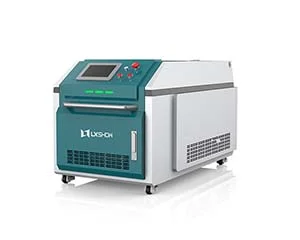
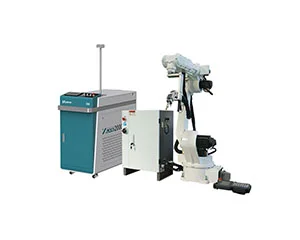
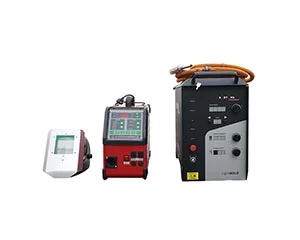
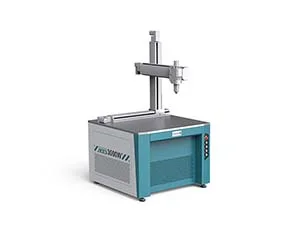
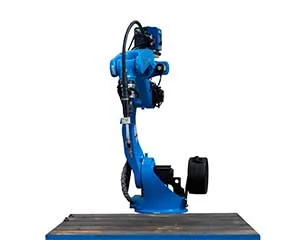
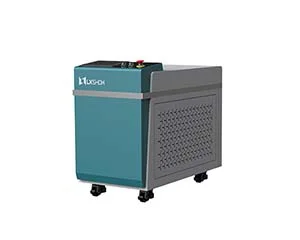
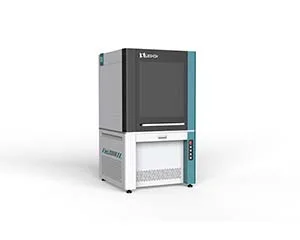
Exploring the physics and integration models driving the modern sheet metal fabrication landscape.
One of the primary historical limitations of laser welding was tight seam tolerances. Small deviations in parts fit-up resulted in incomplete fusion. Modern systems resolve this via dual-axis galvanometric wobble heads. By actively oscillate the laser beam in circular, linear, or figure-8 patterns, the effective beam width is artificially widened (from 0.2mm up to 5.0mm). This compensates for uneven joint fit-up, allowing robust wire-feed bridging on thick butt joints and lap joints without sacrificing structural strength.
Selecting between Single-mode and Multi-mode fiber configurations is critical for optimizing operations. Single-mode systems offer a Gaussian energy profile with high power density, ideal for high-speed cutting or thin foil welding. Multi-mode systems output a flat-top energy profile, delivering a wider beam diameter and a smoother thermal gradient. This design is highly beneficial for cosmetic welding on stainless steels and high-reflectivity copper or aluminum alloys commonly found in industrial heat exchangers.
To align with Industry 4.0 directives, our CNC laser welders are compatible with industrial robotic systems (such as KUKA, Fanuc, or Yaskawa). Using advanced optical seam tracking, the robot monitors the joint location in real time. Dynamic sensors adjust the focus positioning and gas shield coverage on the fly, eliminating human error on long structural runs in agricultural machinery and marine framing fabrications.
Ensuring compliance, installation support, and operator protection protocols.
We provide localized engineering support across both the North and South Islands, coordinating remote commissioning assistance and direct calibration services for complex, automated cells.
Handheld laser welders emit Class 4 scattered radiation. We guide workshops on specifying safe boundaries, supplying dedicated laser protection curtains and interlock switches for workshop entryways.
Proper gas selection is critical. Our systems support pure Argon (for clean stainless and aluminum welds) or Nitrogen mixes to optimize weld geometry and reduce porosity on high-integrity seams.
Essential operational and technical information to guide procurement decisions for the New Zealand industrial sector.
 Lxshow