 Lxshow
1. Executive Brief: Industrial Laser Marking Solutions in Saudi Arabia
As Saudi Arabia aggressively drives its National Industrial Development and Logistics Program (NIDLP) under the banner of Vision 2030, the Kingdom is rapidly transitioning into a regional powerhouse for heavy industrial manufacturing, defense, and high-tech assembly. To achieve global competitiveness, local operations require robust product traceability, strict compliance with national safety guidelines, and error-free marking solutions.
Industrial laser marking machines are the technical backbone of modern manufacturing traceability. From permanent part identification (PPI) on high-pressure oil piping in the Eastern Province to dynamic QR code printing on pharmaceutical packages in Jeddah, this technology guarantees permanent, unalterable, and high-resolution marks. For global sourcing agents and procurement managers operating in Saudi Arabia, acquiring laser marking equipment demands a deep understanding of localized deployment contexts, severe climatic factors, and standard regulatory mandates.
Information Gain: Industrial machinery operating in the Middle East must survive extreme environments. Ambient temperatures in Jubail and Yanbu regularly exceed 48°C, alongside relative humidity levels over 80%. Equipment without customized thermal profiles or IP-rated optical enclosures will experience thermal drift, focal lens degradation, and galvanic corrosion. Our solutions are explicitly designed to withstand these realities.
2. Localized Industrial Landscape & Application Scenarios
Saudi Arabia's industrial footprint is diverse, segmenting into heavy energy infrastructure, industrial metallurgy, construction materials, food packaging, and specialized manufacturing. Laser marking requirements vary dramatically across these sectors:
A. Oil & Gas (Aramco Standard Traceability)
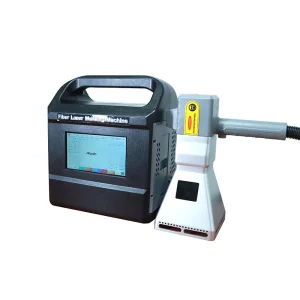
In the petrochemical sector, components must satisfy rigorous tracking standards such as Aramco's engineering directives. High-durability fiber laser marking systems are deployed to etch deep serial numbers, heat numbers, and 2D DataMatrix codes directly onto carbon steel flanges, API-grade pipes, drilling rigs, and subsea valves. The marking must survive decades of abrasive sand exposure, extreme UV radiation, and highly corrosive hydrogen sulfide (H2S) atmospheres.
B. Automotive Parts and Heavy Machinery Assembly
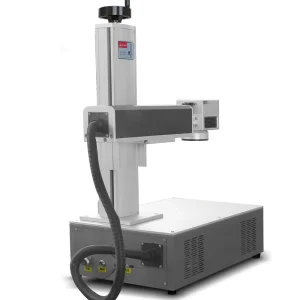
With the establishment of domestic automotive manufacturing hubs (such as Lucid Motors and Ceer in King Abdullah Economic City), Tier-1 suppliers are standardizing automation workflows. Laser marking is used to serialize cast-iron engine blocks, anodized aluminum chassis parts, and brake components. This ensures rapid quality containment and zero-fault tolerance throughout the supply chain.
C. F&B and Pharmaceutical Packaging (Jeddah & Riyadh Hubs)
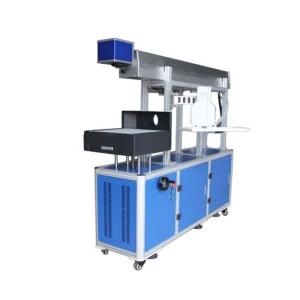
Compliance with the Saudi Food and Drug Authority (SFDA) requires precise batch codes, manufacturing dates, and serialized barcodes. High-speed CO2 and UV laser marking systems operate on continuous high-volume assembly lines, processing polymer PET bottles, glass ampoules, aluminum cans, and multi-layered foil pouches. In this context, inkless marking eliminates the risk of ink contamination and significantly lowers operational costs.