Why Choose an Aluminium Laser Cutter for Your Business?

Time:2026-10-08 Author:Amelia
0%

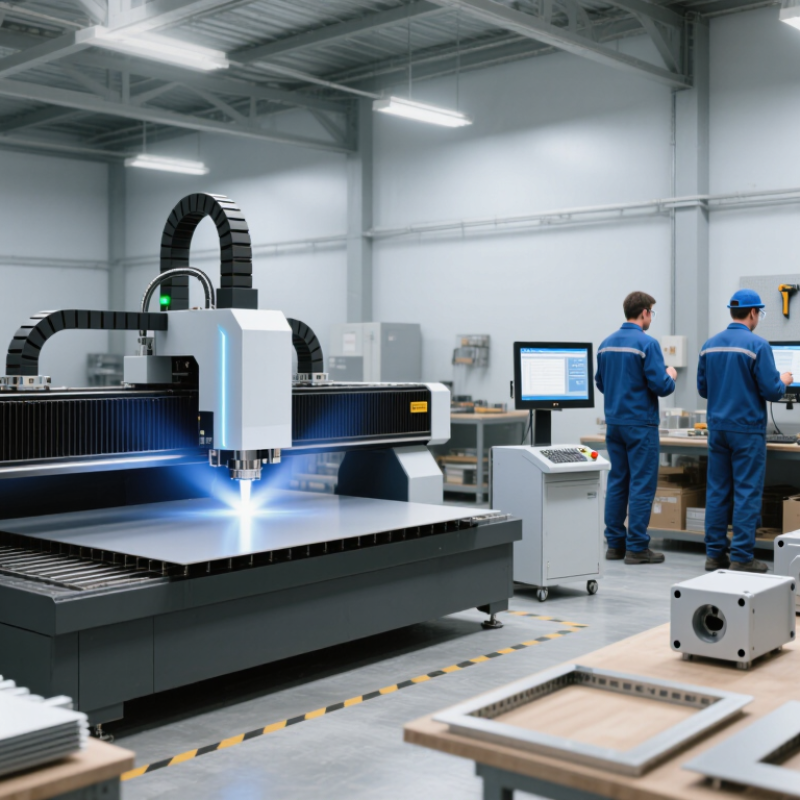
Choosing the right cutting system can shape an aluminium workshop’s productivity, quality, and operating costs. An Aluminium Laser Cutter offers a focused beam that removes material with limited mechanical contact. This matters when producing electrical enclosures, machine guards, architectural panels, or lightweight automotive parts. Clean edges matter.

A modern fibre laser can cut aluminium sheets quickly and repeatably. Its narrow kerf reduces material waste around small brackets and detailed profiles. Operators can also move from one digital design to another with fewer manual adjustments. A 3-metre sheet may enter the machine, receive programmed cuts, and leave with parts ready for bending. That workflow saves time, but it is not automatically perfect.

Dr. Milan Brandt, a recognised manufacturing and laser-processing specialist, describes the technology as “a flexible manufacturing tool, not a solution by itself.” His point deserves attention. Machine performance depends on laser power, assist gas, cutting-head settings, maintenance, and operator training. Poor parameter selection can create dross, heat marks, or unstable edges, especially on reflective aluminium alloys.

Businesses should therefore assess more than advertised cutting speed. They should compare energy consumption, extraction requirements, software capability, service support, and expected material thickness. A supplier’s test cut can reveal more than a brochure. Ask for samples using your actual alloy and thickness.

The investment may be substantial. Still, reduced setup time and improved repeatability can support steady growth. Every workshop has different priorities. The best Aluminium Laser Cutter is the one that fits real production needs, not the most powerful model on paper.
Why Choose an Aluminium Laser Cutter for Your Business?

What Is an Aluminium Laser Cutter?

An aluminium laser cutter is a computer-controlled machine that focuses a high-energy laser beam onto aluminium sheet, plate, or profile. The beam melts or vaporises a narrow path, while assist gas removes molten material. A CNC system then guides the cutting head along programmed contours. In practical use, this creates clean openings, precise edges, and repeatable parts for enclosures, signs, frames, and lightweight assemblies.

Aluminium is highly reflective and conducts heat quickly, so cutting it requires more than simply increasing laser power. Engineers normally adjust focus position, pulse or continuous-wave settings, cutting speed, and assist-gas pressure. Fiber-based systems are widely selected for production because they transfer energy efficiently to thin and medium aluminium sections. It is not magic. Setup still matters.

The International Aluminium Institute projects global aluminium demand could rise from about 86 million tonnes in 2019 to roughly 170 million tonnes by 2050. This growth increases pressure for efficient, material-saving fabrication. A 2024 market analysis by Grand View Research also estimated strong expansion in the global laser-cutting machine market through 2030, supported by automation and demand for accurate processing. These figures support the technology’s relevance, but they do not guarantee profit. A rushed setup can cause burrs, warping, or excessive scrap. In my experience, operators should test a small sample first, inspect the edge under magnification, and compare actual cycle time with software estimates. The overlooked detail is often material thickness variation.

Why Choose an Aluminium Laser Cutter for Your Business?

What Is an Aluminium Laser Cutter? It is a focused-laser system designed to cut aluminium sheet and plate with high accuracy, narrow kerfs, and minimal mechanical force.

Aluminium has a density of approximately 2.70 g/cm³, considerably lower than steel and copper. This can reduce the weight of parts and make sheet handling easier, while laser cutting supports precise profiles with little material contact. Actual cutting performance depends on alloy, thickness, laser power, assist gas, and machine settings.

How Does Laser Cutting Process Aluminium?

Why Choose an Aluminium Laser Cutter for Your Business?

Aluminium laser cutting begins with a clean digital drawing and a carefully prepared sheet. Operators check thickness, alloy, surface film, and possible scratches before production. A fiber laser directs a concentrated beam onto the aluminium surface. The beam melts a narrow path, while assist gas removes molten metal from the cut.

Aluminium reflects laser energy more strongly than mild steel. This property demands accurate power, focus, speed, and gas settings. Nitrogen often produces a clean edge without heavy oxidation. Oxygen can increase cutting speed, but it may darken the edge. Air is economical for some jobs, although results can vary. Small test cuts help confirm the right balance. They also expose problems early.

The cutting head follows the programmed profile with limited mechanical contact. This reduces tool wear and supports detailed shapes, holes, and repeated parts. Heat remains concentrated, but thin sheets can still warp when settings are excessive. A first-pass setting is rarely perfect. Operators should inspect kerf width, burrs, edge squareness, and the heat-affected zone. Protective film may reduce cosmetic damage, yet it can affect cutting stability if poorly applied. Aluminium is efficient to process, but it is not effortless. Careful calibration, regular nozzle checks, and honest inspection protect both quality and production costs.

Why Choose an Aluminium Laser Cutter for Your Business? - How Does Laser Cutting Process Aluminium?

Data Dimension Typical Aluminium Data How It Affects Laser Cutting Business Benefit
Material density Approximately 2.70 g/cm³ for common wrought aluminium alloys Aluminium parts are significantly lighter than steel parts of the same volume. Lower material weight can reduce handling, transport, and assembly costs.
Thermal conductivity Common alloys: approximately 120–235 W/m·K, depending on grade and temper Heat spreads rapidly away from the laser spot, which can make cutting more sensitive to power, speed, focus, and assist gas settings. A correctly tuned process can produce fast cuts while limiting heat-affected distortion.
Melting temperature Pure aluminium melts at about 660°C; alloys commonly melt across approximately 570–655°C The laser must create a narrow molten zone and remove the melt efficiently through the kerf. Controlled melting supports narrow cuts and repeatable production quality.
Surface reflectivity Bare aluminium reflects a substantial portion of near-infrared laser light; absorption changes with wavelength, surface condition, alloy, and temperature. Reflective surfaces require suitable equipment, correct beam delivery, stable workholding, and carefully validated cutting parameters. Modern fibre-laser systems can process aluminium efficiently when configured for reflective metals.
Common alloy: 5052 Aluminium-magnesium alloy; thermal conductivity is commonly around 138 W/m·K; melting range is approximately 607–649°C. Often selected for sheet-metal parts requiring good formability and corrosion resistance. Suitable for enclosures, panels, brackets, and fabricated components.
Common alloy: 6061 Aluminium-magnesium-silicon alloy; thermal conductivity is commonly around 167 W/m·K; melting range is approximately 582–652°C. Its strength and widespread availability make it a frequent choice for precision components and structural parts. Laser cutting supports fast prototyping and repeatable production of complex profiles.
Common alloy: 7075 High-strength aluminium-zinc alloy; thermal conductivity is commonly around 130 W/m·K; melting range is approximately 477–635°C. The alloy is strong but can be more demanding to cut and may require application-specific parameter testing. Enables lightweight, high-strength parts for demanding mechanical applications.
Laser source commonly used Near-infrared fibre lasers are widely used for aluminium sheet and plate cutting; the appropriate power depends on thickness, alloy, geometry, and required speed. The process uses a focused beam to melt the material while compressed air, nitrogen, or another suitable assist gas removes molten metal. Non-contact cutting reduces tool wear and supports automated, flexible production.
Kerf width Typically narrow, often approximately 0.1–0.5 mm, depending on laser power, nozzle, focus, material thickness, and cutting settings. A narrow kerf allows close part nesting and detailed contours. Improves material utilisation and reduces secondary machining in many applications.
Typical cut edge The edge can be clean and burr-minimised, but dross or roughness may occur if speed, focus, gas pressure, or power is not matched to the material. Parameter validation is especially important because aluminium conducts heat quickly and produces reflective molten material. Consistent settings can reduce deburring, grinding, and other post-processing work.
Assist gas selection Compressed air is economical; nitrogen is commonly used when a bright, low-oxidation edge is required. Gas type and pressure influence oxidation, dross removal, edge appearance, and operating cost. The gas choice can balance edge quality with consumable cost and production speed.
Production flexibility Digital cutting paths can produce straight lines, curves, slots, holes, and intricate profiles without dedicated hard tooling. CAD/CAM files can be changed quickly for different part sizes or design revisions. Shorter setup times support prototyping, custom orders, small batches, and high-mix production.

Note: Material properties are typical reference values and vary with alloy composition, temper, thickness, surface finish, and test method. Final cutting parameters should be validated on the specific aluminium grade and thickness.

What Business Benefits Does Aluminium Laser Cutting Offer?

Why Choose an Aluminium Laser Cutter for Your Business?

Aluminium laser cutting can improve production speed, accuracy, and material efficiency. A focused beam creates clean profiles without physical contact. This reduces tool wear and keeps delicate sheets more stable during cutting. In daily workshop use, repeatable results matter as much as peak cutting speed. Digital files can be adjusted quickly, helping businesses respond to custom orders and changing designs. Narrow kerfs also reduce unnecessary material loss, especially when parts are nested carefully. That saving becomes noticeable across regular production runs.

The process can support prototypes, enclosures, signage, transport components, and lightweight frames. It also reduces some secondary finishing work, although every alloy behaves differently. Reflective aluminium can challenge unsuitable equipment or poor settings. That part is easy to underestimate. Operators should verify power, speed, assist gas, and focus through controlled test cuts. Reliable results depend on maintenance, ventilation, calibration, and trained supervision, not the machine alone. A thoughtful setup can improve consistency while reducing rework and production delays.

Tips: Start with sample sheets from your actual supplier. Record settings for each alloy and thickness. Keep protective windows clean, and inspect edges for burrs or heat marks. Review nesting layouts before cutting to reduce scrap. Do not chase maximum speed blindly; a slightly slower setting may deliver cleaner edges and fewer rejected parts. Track cycle time, material use, and finishing effort to measure the real business benefit.

Which Machine Features Should Businesses Evaluate?

Choosing an aluminium laser cutter starts with the work, not the advertised wattage. In a fabrication shop, operators should record sheet thickness, alloy, daily volume, and smallest required feature. A 3 kW fiber source may cut common aluminium sheet efficiently, but performance changes with 5052, 6061, thickness, and edge-quality targets. Ask for sample cuts using your material. Inspect burrs, heat tint, kerf width, and corner accuracy. That test reveals more than a sales chart. Very few machines fit every job.

Businesses should examine motion accuracy and repeatability, not speed alone. Linear guides, a rigid frame, and calibrated servo drives help maintain hole positions across a full sheet. Autofocus and automatic nozzle-centering reduce setup mistakes. They also save time. A stable cutting head needs collision protection and accessible lenses. Assist-gas control matters because clean aluminium edges often depend on pressure stability, nozzle condition, and oxygen or nitrogen purity. Enclosed guarding, interlocks, fume extraction, and emergency stops should be documented and independently verified. Safety cannot be an afterthought.

Software deserves equal attention. Look for nesting that limits scrap, clear error messages, job records, and compatibility with existing design files. Check loading access, bed size, automated lubrication, filter replacement, and local technical support. Calculate total cost using electricity, gas, consumables, maintenance, and operator training. A cheaper machine can become expensive when downtime interrupts a delivery. I would also ask how calibration is checked after service. This is often overlooked. One honest concern remains: cutting faster may reduce edge quality or increase consumable wear. The right choice balances throughput, precision, safety, and realistic maintenance capacity.

How Can Businesses Operate and Maintain It Safely?

Why Choose an Aluminium Laser Cutter for Your Business?

Safe operation begins with respecting aluminium’s reflective surface. The machine must be designed for reflective metals and installed in a controlled workspace. A protective enclosure, working interlocks, and a clearly marked emergency stop are essential. Never bypass a safety switch, even during a quick test. The laser can damage eyes and skin without obvious warning.

Operators should receive practical training before cutting production parts. They need to understand power settings, assist-gas flow, focus distance, and material thickness. Keep the cutting area clear of oil, paper, and loose packaging. Use suitable eye protection when the equipment’s safety assessment requires it. Good ventilation removes smoke and fine particles. It also keeps the lens and nearby surfaces cleaner.

Tips: Inspect the lens, mirrors, nozzle, cables, and cooling system before each shift. Record faults, cleaning dates, and unusual cutting results. Clean optical parts only with approved materials and gentle pressure. Do not guess when alignment looks wrong. Stop the machine and contact a qualified technician. Isolate electrical power before internal maintenance. Never leave an active cut unattended.

Small habits matter. A rushed setup can ruin aluminium and create unnecessary risk. Even experienced operators can overlook a dirty nozzle or weak coolant flow. That is why checklists help. They may feel repetitive, but repetition prevents careless assumptions. Review the procedure after near misses, because a safe process can still be improved.

FAQS

What is an aluminium laser cutter?

It is a computer-controlled machine that focuses a laser beam on aluminium. The beam melts or vaporises a narrow cutting path.

How does the cutting process work?

A CNC system guides the cutting head along programmed contours. Assist gas removes molten material and helps form clean edges.

Why can aluminium be difficult to cut?

Aluminium reflects laser energy and conducts heat quickly. Operators must adjust focus, power settings, speed, and gas pressure carefully.

What business benefits can aluminium laser cutting provide?

It can improve accuracy, repeatability, and material efficiency. Narrow cutting paths may reduce scrap in carefully arranged layouts.

Which products can this process support?

Common applications include enclosures, signs, frames, prototypes, transport components, and lightweight assemblies. Custom designs can be changed digitally.

What should a business test before buying a machine?

Test sample sheets from the actual supplier. Inspect burrs, heat marks, kerf width, corner accuracy, and cutting time.

Does higher laser power always produce better results?

No. Performance also depends on alloy, thickness, focus, speed, gas pressure, and machine condition. More power cannot fix poor setup.

Which machine features deserve close attention?

Evaluate motion accuracy, repeatability, autofocus, nozzle-centering, collision protection, and stable assist-gas control. Small features matter.

How can operators reduce waste and rework?

Record settings for each alloy and thickness. Review nesting layouts, clean protective windows, and inspect edges after test cuts.

What safety and maintenance details should businesses check?

Confirm guarding, interlocks, emergency stops, fume extraction, calibration, lubrication, and filter replacement. Maintenance planning is easy to underestimate.

How should the real operating cost be calculated?

Include electricity, assist gas, consumables, maintenance, training, and downtime. A cheaper machine may become costly during repeated service interruptions.

Is maximum cutting speed the best production target?

Not always. A slightly slower setting may create cleaner edges and fewer rejected parts. Speed still needs practical measurement.

Conclusion

An Aluminium Laser Cutter is a precision machine designed to cut and shape aluminium sheets, plates, and components by focusing a powerful laser beam onto the material. During the process, the laser melts or vaporizes the cutting path while an assist gas removes debris and helps produce clean edges. With suitable power, speed, focus, and cooling settings, businesses can achieve accurate results across a range of aluminium thicknesses and designs.

For many businesses, aluminium laser cutting improves productivity, reduces material waste, supports complex shapes, and delivers consistent quality with less manual finishing. When evaluating a machine, companies should consider laser power, cutting capacity, automation options, software compatibility, energy efficiency, safety systems, and maintenance requirements. Safe operation also requires trained personnel, protective equipment, proper ventilation, regular inspection of lenses and filters, and timely servicing of cooling and motion systems. A well-selected and maintained Aluminium Laser Cutter can provide reliable performance, flexible production, and long-term operational value.


Amelia

Amelia

Amelia is a seasoned marketing professional with a wealth of expertise in our company’s core offerings. With an unwavering passion for driving growth and innovation, she plays a pivotal role in shaping our marketing strategies and enhancing brand visibility. A key aspect of her responsibilities......