Choosing a Sheet Laser Cutter is rarely just a matter of comparing laser power. Global buyers must examine cutting accuracy, machine stability, software, service coverage, and long-term operating costs. A 6 kW fiber system may cut thick carbon steel quickly, yet it may deliver poor value without reliable nesting software or responsive technical support.
Theodore H. Maiman, a pioneer of laser technology, famously observed, “The laser is a solution looking for a problem.” His warning still matters. Manufacturers should solve real production challenges, not simply promote larger power ratings. In a busy fabrication workshop, operators notice the difference through clean edges, fewer nozzle changes, stable piercing, and predictable production schedules.
This guide evaluates ten leading Sheet Laser Cutter manufacturers for international purchasers. The comparison considers engineering experience, fiber laser performance, cutting-table design, automation, safety systems, spare-parts access, and after-sales support. It also considers practical details, such as whether a technician can respond across time zones or whether replacement lenses arrive before production stops.
No ranking is perfect. Public specifications can hide differences in testing conditions, material grades, and software versions. Some buyers may value maximum throughput, while others need compact equipment for a smaller factory. Prices also change by region, configuration, freight, installation, and training.
The manufacturers below are therefore assessed through a balanced, evidence-based lens. Their reputations matter, but real results matter more. A dependable machine should cut consistently on an ordinary Tuesday, not only perform well in a showroom demonstration.
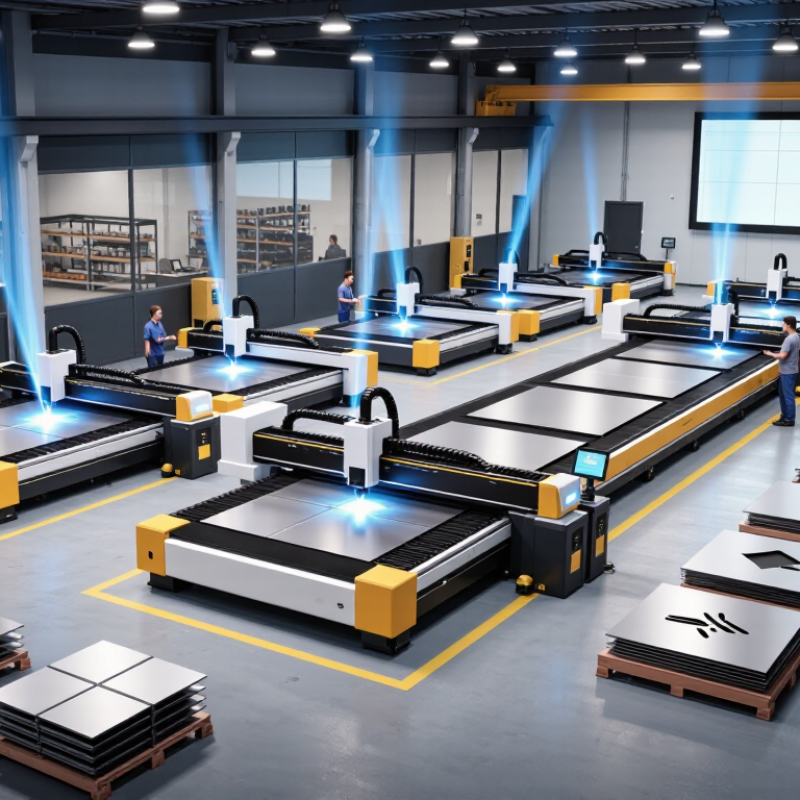
Top 10 Sheet Laser Cutter Manufacturers for Global Buyers
How Sheet Laser Cutters Work and Why Manufacturers Matter
A sheet laser cutter directs a focused beam across metal, guided by computer-controlled motion. The beam melts or vaporizes the material along a programmed cutting path. Assist gas then clears molten metal from the cut zone. Nitrogen can protect stainless steel edges, while oxygen may increase cutting speed on mild steel.
In practical use, operators watch more than advertised wattage. They check pierce time, edge quality, kerf width, and heat distortion. A clean workshop still matters. Dust on the protective lens can weaken the beam and create uneven cuts. Experienced teams test settings on sample sheets before full production. Small errors become expensive quickly.
The manufacturer influences reliability beyond the machine frame. Strong suppliers document calibration procedures, provide realistic cutting charts, and train maintenance staff. They should explain duty cycles, replacement-part availability, software updates, and service response times. Certification and traceable quality checks also support safer purchasing decisions. However, specifications can look better than daily results. No machine is perfect. Buyers should request test samples using their actual material, thickness, and design files. I would also inspect finished edges under bright light, because photographs often hide burrs. A lower purchase price may feel attractive, yet poor support can stop production for several days. The best comparison includes operating costs, technician access, energy use, and the manufacturer’s willingness to discuss limitations.
| Rank | Manufacturer Capability Profile | Typical Laser Source | Common Power Range | Typical Working Area | Suitable Sheet Materials | Typical Positioning Accuracy | Key Buyer Advantage |
|---|---|---|---|---|---|---|---|
| 1 | High-volume industrial system builder | Fiber laser | 6–30 kW | 3,000 × 1,500 mm to 6,000 × 2,500 mm | Mild steel, stainless steel, aluminum, brass, copper | Approximately ±0.05 mm to ±0.10 mm | High throughput |
| 2 | Flexible production equipment specialist | Fiber laser | 3–15 kW | 3,000 × 1,500 mm to 4,000 × 2,000 mm | Carbon steel, stainless steel, aluminum and non-ferrous metals | Approximately ±0.05 mm to ±0.08 mm | Versatile production |
| 3 | Heavy-plate cutting system manufacturer | High-power fiber laser | 12–40 kW | 4,000 × 2,000 mm to 12,000 × 2,500 mm | Thick mild steel, stainless steel and aluminum plate | Approximately ±0.08 mm to ±0.15 mm | Thick-material capability |
| 4 | Compact-format machine producer | Fiber laser | 1.5–6 kW | 1,500 × 3,000 mm to 2,000 × 4,000 mm | Thin and medium-gauge steel, stainless steel and aluminum | Approximately ±0.05 mm to ±0.10 mm | Space efficiency |
| 5 | Automated sheet-processing integrator | Fiber laser with automated loading and unloading | 3–12 kW | 3,000 × 1,500 mm to 4,000 × 2,000 mm | Steel, stainless steel, aluminum, brass and copper | Approximately ±0.05 mm to ±0.10 mm | Reduced handling labor |
| 6 | Multi-process fabrication equipment maker | Fiber laser with optional bending or tube-processing modules | 3–20 kW | 3,000 × 1,500 mm to 6,000 × 2,000 mm | Carbon steel, stainless steel, aluminum and selected copper alloys | Approximately ±0.05 mm to ±0.12 mm | Process integration |
| 7 | Entry-level and mid-market machine manufacturer | Fiber laser | 1.5–6 kW | 3,000 × 1,500 mm | Mild steel, stainless steel and aluminum | Approximately ±0.08 mm to ±0.15 mm | Lower initial investment |
| 8 | Precision thin-sheet system builder | Fiber laser or CO₂ laser | 1–4 kW | 1,500 × 3,000 mm to 2,000 × 4,000 mm | Thin steel, stainless steel, aluminum and coated sheet | Approximately ±0.03 mm to ±0.08 mm | Fine-detail cutting |
| 9 | Large-format custom machine supplier | Fiber laser | 6–30 kW | 6,000 × 2,000 mm to 12,000 × 3,000 mm | Long steel plate, stainless steel, aluminum and structural sheet | Approximately ±0.10 mm to ±0.20 mm | Oversized workpieces |
| 10 | Export-focused modular system manufacturer | Fiber laser | 2–12 kW | 3,000 × 1,500 mm to 6,000 × 2,000 mm | Mild steel, stainless steel, aluminum, brass and copper | Approximately ±0.05 mm to ±0.12 mm | Configurable packages |
Compare cutting trials, machine construction, service, safety documents, and lifetime operating costs. Catalog prices are not enough.
Use your real materials and thicknesses, such as 3 mm stainless steel or 6 mm carbon steel. Test production settings.
Check edge smoothness, hole accuracy, heat marks, and dross. Request measured results, not polished showroom claims.
A rigid bed, stable motion system, and consistent laser output improve repeatability. Also check positioning accuracy and automatic height control.
Review nesting software, loading systems, unloading systems, and control simplicity. Less waste matters. Automation may reduce operator delays.
Ask about spare-part availability, remote support hours, installation, training, and local technicians. A delayed part can stop one shift.
Heat and dust may reveal weaknesses hidden during short demonstrations. Watch noise, accuracy, alarms, and operator delays.
Include energy use, consumables, maintenance, warranty terms, and expected production volume. A cheaper machine may cost more later.
Yes. Speak with factories handling similar workloads. Ask about downtime and service response, not only cutting speed.
Probably not. One may offer strong mechanics but weaker software support. Record these trade-offs honestly before deciding.
This article provides a practical overview of the Sheet Laser Cutter industry for global buyers. It explains how these systems use focused laser energy, motion controls, and computer-guided software to cut metal sheets with speed and precision. It also examines why the manufacturer matters, including machine reliability, engineering quality, production consistency, safety design, technical expertise, and long-term service capability. Key evaluation criteria include cutting performance, supported materials and thicknesses, automation options, energy efficiency, customization, quality certifications, delivery capacity, warranty terms, and customer support.
The article then presents profiles of ten leading types of manufacturers without focusing on brand names, comparing their technologies, material capabilities, price ranges, software functions, maintenance requirements, and after-sales support. Finally, it offers a structured selection approach for buyers by matching machine specifications with production volume, material needs, budget, facility conditions, operator skills, and future expansion plans. This guidance helps companies make informed purchasing decisions and choose a dependable solution that delivers stable performance, efficient operation, and sustainable value across different markets.

 Lxshow