7 Tips for Buying a Laser Cutter for Steel

Time:2026-09-13 Author:Amelia
0%

Buying a Laser Cutter Steel machine is not simply a matter of choosing the highest wattage. A serious purchase must match your steel grades, sheet thicknesses, daily workload, and workshop space. Mild steel, stainless steel, and galvanized sheet can demand different settings, gases, and maintenance routines. The machine may look impressive on a showroom floor. Your production results matter more.

Dr. John Powell, a respected laser-processing researcher and author, once stated, “Cut quality begins with process control, not machine power.” That principle deserves attention. A reliable fiber laser should deliver stable beam quality, accurate motion, suitable cutting speed, and repeatable results. Check the maximum thickness carefully. Then test your own material, rather than trusting a brochure alone. A clean 10-millimeter edge in a demonstration does not guarantee the same result during a twelve-hour shift.

This guide examines seven practical buying points for Laser Cutter Steel equipment. It considers laser power, cutting capacity, automation, software, consumable costs, safety systems, and after-sales support. Service response can matter more than a small price difference. Ask about replacement lenses, nozzle availability, operator training, and warranty coverage. Inspect sample cuts under bright light. Feel the edge. Look for dross, taper, discoloration, and uneven corners. Some recommendations may not fit every workshop. That is the uncomfortable part. A compact machine can outperform a larger model when operators understand its limits and maintain it consistently. Reliable buying decisions come from measured tests, honest workload estimates, and a willingness to question attractive specifications.
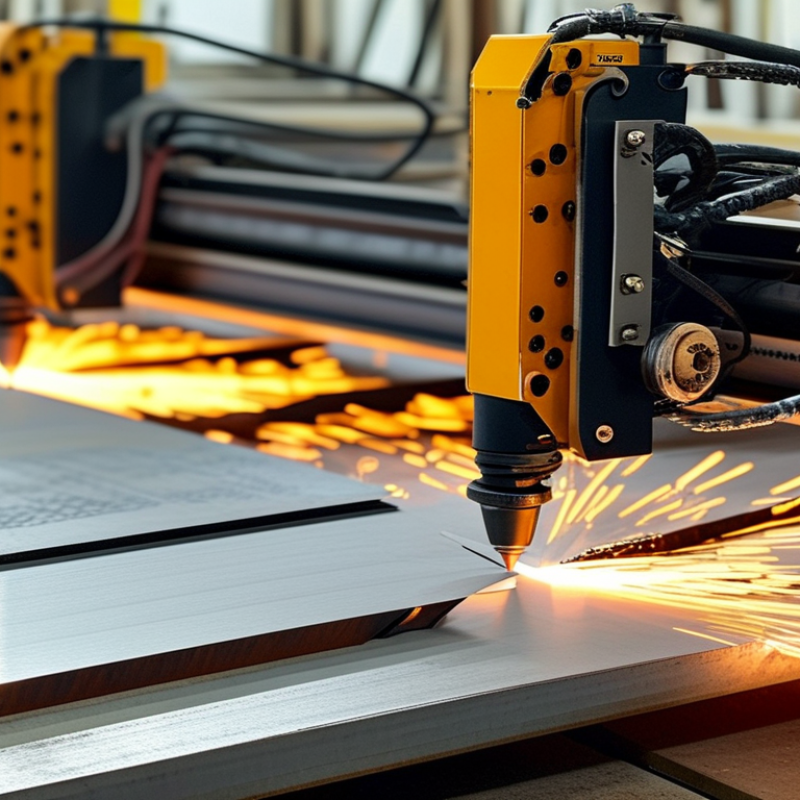
7 Tips for Buying a Laser Cutter for Steel

Define Your Steel Cutting Requirements and Production Goals

Buying a laser cutter for steel starts with your production reality, not the machine’s maximum wattage.

World Steel Association data recorded about 1.89 billion tonnes of crude steel production in 2023. That scale shows how varied steel-processing needs can be.

Tip 1: Define your steel grades, thicknesses, sheet sizes, and daily cutting volume.

Tip 2: Separate prototype work from repeat production. Their cycle times are rarely alike.

Tip 3: Record the smallest holes, narrowest slots, and tightest tolerances you actually require.

Tip 4: Calculate the target cost per part, including gas, power, lenses, maintenance, labor, and scrap.

The U.S. Department of Energy identifies energy management as a major manufacturing cost-control opportunity. However, a lower electricity figure does not guarantee lower operating costs.

I have seen clean spreadsheets miss loading delays and rejected parts.

Tip 5: Measure current bottlenecks for two weeks.

Tip 6: Set realistic output goals for one shift, not an optimistic weekend test.

Tip 7: Match the cutting head, automation, extraction, and software to your workflow.

ISO 9013 provides internationally recognized quality classifications for thermally cut surfaces, so define the required edge quality before comparing machines.

Ask for test cuts using your own steel, thickness, and geometry. Review burrs, heat effects, hole accuracy, and cycle time.

Some requirements may change after testing. That is normal.

Record those changes before approving the purchase.

Compare Laser Types for Steel Applications

When buying a laser cutter for steel, compare the laser source before comparing wattage. Fiber lasers usually suit carbon steel and stainless steel sheets. Their concentrated beam creates narrow kerfs, sharp corners, and efficient cuts. They also handle reflective metals more reliably than older systems. CO2 lasers can cut steel effectively, but they often require more power, careful alignment, and higher operating costs. They remain useful when one machine must process steel and nonmetal materials. Diode lasers are generally better for marking or very thin coated steel, not serious production cutting.

Tip: Match the laser type to your actual steel thickness. A 1,500-watt fiber system may outperform a larger machine when cutting thin sheet efficiently. Ask for test cuts using your own grade, thickness, and preferred edge quality. Inspect the underside for dross. Small details matter.

Tip: Check the assist-gas system, autofocus, bed stability, and extraction design. Oxygen can increase cutting speed on carbon steel, while nitrogen usually produces cleaner, oxidation-resistant edges. Gas costs can change the real budget. Do not judge the machine by speed alone. A fast cut with heavy slag is not a good result.

A common buying mistake is trusting advertised capacity without reviewing duty cycle and service records. I would also question unclear accuracy claims. Steel reflects heat, and poor setup can damage optics or distort thin sheets. Request documented test results, safety features, training, and maintenance guidance. The best choice may be less powerful, but more consistent.

7 Tips for Buying a Laser Cutter for Steel - Compare Laser Types for Steel Applications

Tip What to Compare Fiber Laser CO₂ Laser Nd:YAG / Disk Laser Buying Guidance
1 Match the laser type to the steel workload Uses a near-infrared wavelength of approximately 1.03–1.08 µm. It is highly effective for carbon steel, stainless steel, and galvanized steel sheet and plate. Uses a wavelength of approximately 10.6 µm. It can cut steel, but reflective metals generally require more careful setup and may have higher operating costs. Near-infrared solid-state systems can cut steel and may offer excellent beam quality, but they are less common for general-purpose sheet-metal purchasing. For most new steel sheet and plate applications, compare fiber systems first; consider CO₂ or other solid-state systems when existing equipment, materials, or process requirements justify them.
2 Choose power based on material thickness Common industrial configurations range from roughly 1–20 kW. Actual capacity depends on steel grade, assist gas, cutting head, nozzle, speed, and edge-quality requirements. Common configurations range from approximately 1.5–6 kW for many sheet-metal applications. Thick reflective steel may require conservative parameters. Power and thickness capability vary widely by design. These systems are often selected for specialized cutting, precision work, or existing production lines. Do not select power from a maximum-thickness claim alone. Request cutting-speed charts for the exact steel grades and thicknesses you process most often.
3 Evaluate cutting speed and throughput Typically provides high electrical-to-optical efficiency and strong performance on thin-to-medium steel sheet. It usually has no resonator gas requirement. Can deliver good cut quality, but optical-path alignment, gas management, and longer warm-up or maintenance routines may affect uptime. Can provide high beam quality and precision, although throughput and cost depend strongly on the specific architecture and power level. Compare parts per hour, pierce time, acceleration, and non-cutting travel—not only the advertised maximum cutting speed.
4 Check assist-gas requirements Oxygen is commonly used for carbon-steel cutting because it supports the cutting reaction. Nitrogen is commonly used when a cleaner, oxide-free stainless-steel edge is required. Also commonly uses oxygen or nitrogen. Gas consumption and pressure requirements depend on nozzle design, thickness, and process settings. Uses similar assist-gas principles, but operating parameters are more system-specific. Budget for gas storage, regulators, filtration, piping, and the required flow rate. Include nitrogen-generation costs if high-volume stainless cutting is planned.
5 Prioritize edge quality and heat control The shorter wavelength is absorbed efficiently by many metals, supporting narrow kerfs and a relatively small heat-affected zone when parameters are correctly tuned. Can produce high-quality edges, but reflective-metal processing and optical alignment require careful control to maintain consistency. Often offers strong beam quality and precision for specialized applications, subject to system configuration and material thickness. Ask for sample cuts using your actual steel grade, surface condition, thickness, and required tolerance before purchase.
6 Compare maintenance and operating costs Usually has fewer beam-delivery components and does not require a CO₂ resonator gas mixture. Protective windows, nozzles, lenses, filters, and cooling systems still require routine service. May require resonator gas management, mirrors, optical-path alignment, and more frequent cleaning of beam-delivery components. Maintenance requirements vary considerably and can include lamps or pumping components in some designs, as well as precision optical maintenance. Calculate total cost of ownership using electricity, assist gas, consumables, preventive maintenance, cooling, downtime, and expected service life.
7 Verify automation, safety, and software compatibility Commonly supports automatic focus, height sensing, nesting software, piercing control, and exchange-table automation, depending on the machine configuration. Can support the same functions, but integration depends on the machine platform and optical-path design. Automation and controls are highly dependent on the specific system architecture. Confirm enclosure classification, interlocks, fume extraction, fire protection, material-handling capacity, file compatibility, operator training, and service response.

Note: Performance ranges are representative industry values rather than guaranteed specifications. Cutting results vary with laser power, steel grade, thickness, surface coating, assist gas, nozzle geometry, machine dynamics, and required edge quality.

Evaluate Power, Bed Size, and Cutting Capacity

Buying a steel laser cutter starts with real production requirements, not the highest advertised wattage. Grand View Research estimated the global laser cutting machine market exceeded USD 5 billion in 2023, reflecting wider industrial adoption. That growth does not make every machine suitable for heavy steel work. A 1 kW system may handle thin carbon steel efficiently, while regular 12 mm production often needs roughly 3 kW or more. Actual results depend on steel grade, assist gas, nozzle condition, and cutting speed.

Measure your largest sheet before selecting the bed. A 1,220 × 2,440 mm bed fits common sheet sizes with less repositioning. Leave practical clearance around the edges. It improves loading and reduces collision risks. Small beds can still work for brackets, panels, and short batches. They become frustrating when operators split large plates manually. I have seen buyers underestimate this detail. It often costs more time than expected.

Check rated capacity against your daily workload, not a single showroom sample. Ask for test cuts using your steel thickness, tolerance, and preferred edge quality. ISO 9013 classifies thermal-cut edge quality, so request measurable results rather than attractive photographs. For production, choose headroom above your normal thickness; a machine rated for 20 mm should not run 20 mm all day. Cutting speed also changes sharply near maximum capacity. The 2024 World Steel Association Short Range Outlook reported global steel demand above 1.7 billion tonnes, but material variation remains significant. Mild steel, stainless steel, and galvanized sheet require different settings, and one universal cutting chart is rarely reliable.

7 Tips for Buying a Laser Cutter for Steel — Evaluate Power, Bed Size, and Cutting Capacity

Laser power strongly influences steel thickness, productivity, and operating cost. The chart shows representative upper-range mild-steel cutting capacities commonly used for initial equipment planning; actual results depend on material grade, assist gas, focus settings, nozzle condition, and cutting speed.

When comparing machines, confirm the required power, choose a bed size that fits your standard sheet dimensions, verify the rated cutting capacity for mild steel, stainless steel, and aluminum, check acceleration and positioning accuracy, evaluate automation and loading options, estimate gas and maintenance costs, and confirm operator safety features and service support.

Check Precision, Software, Safety, and Maintenance Features

Buying a laser cutter for steel requires more than checking wattage. Precision should be tested on your actual material, not only on a showroom sample. Ask for cut-edge photographs, tolerance records, and repeatability results. ISO 230-2 provides a recognized method for evaluating positioning accuracy and repeatability.

Software deserves equal attention. A reliable system should import common CAD files, detect open contours, and warn about collisions or excessive heat. During trials, I would inspect the nesting screen closely. Small gaps between parts can waste surprising amounts of steel. Cybersecurity also matters, especially when machines connect to factory networks. NIST’s Cybersecurity Framework 2.0 recommends identifying assets, protecting access, and monitoring unusual activity. These steps are often skipped. That is a mistake.

Safety features must include enclosed beam paths, interlocks, emergency stops, extraction, and clear fault messages. OSHA recorded 5,283 fatal workplace injuries in the United States during 2023, according to its Census of Fatal Occupational Injuries report. A cutter cannot remove every workplace risk, but its design should reduce predictable exposure. Maintenance access is practical, not cosmetic. Check nozzle replacement time, lens inspection procedures, filter availability, and service records. The U.S. Department of Energy’s Operations and Maintenance Best Practices guide reports that preventive maintenance can reduce maintenance costs by roughly 12–18% compared with reactive work. I would still verify that figure against your plant’s history, because dusty air, thick plate, and operator habits change the result.

Calculate Total Cost, Support, and Long-Term Value

7 Tips for Buying a Laser Cutter for Steel

Calculate the total cost before comparing machine prices. Include installation, ventilation, electricity, assist gas, lenses, nozzles, and routine maintenance. A lower purchase price can hide expensive operating demands. Cheap is not always cheap. Estimate costs over three to five years, not only the first invoice. Add expected downtime and operator training. Even a careful spreadsheet can miss small recurring expenses.

Request a written service plan. Ask about response times, spare-part availability, remote diagnosis, and technician coverage in your region. Support quality matters when a cutter stops during a production order. Ask for customer references with similar steel thickness and workload. Request sample cuts using your own material. Inspect edge quality, heat marks, piercing time, and dimensional accuracy. Ask for numbers. Sales claims alone are not enough.

Evaluate long-term value through productivity and flexibility. Check whether the control software is practical for daily operators and whether future upgrades are possible. Confirm warranty limits, maintenance intervals, and training included after installation. Consider resale value, energy efficiency, and the cost of replacing key components. A reliable machine should produce consistent parts after months of use, not only during a showroom demonstration. Leave room for mistakes. Your first workload forecast may be too optimistic, and rapid growth may demand capacity sooner than expected. Support and durability often matter more than impressive specifications.

FAQS

How much laser power is needed for steel cutting?

A 1 kW system can cut thin carbon steel efficiently. Regular 12 mm production may need about 3 kW or more. Steel grade, gas, nozzle condition, and speed also matter.

How should I choose the cutting bed size?

Measure your largest sheet before buying. A 1,220 × 2,440 mm bed fits many common sheets. Leave clearance around the edges. Small beds suit brackets and short batches, but large plates may require frustrating manual repositioning.

Should the machine’s maximum thickness match my daily work?

No. Leave capacity headroom above your normal thickness. A machine rated for 20 mm should not cut 20 mm steel continuously. Cutting speed and edge quality often decline near the limit.

What materials should be tested before purchase?

Request cuts using your own carbon steel, stainless steel, or galvanized sheet. Check edge quality, heat marks, piercing time, and dimensional accuracy. One cutting chart rarely suits every steel type.

How can I compare the real operating cost?

Include installation, ventilation, electricity, assist gas, lenses, nozzles, maintenance, and training. Estimate three to five years. Small recurring costs can quietly grow. Cheap is not always cheap.

What support details should I request in writing?

Ask about response times, spare-part availability, remote diagnosis, and local technician coverage. Confirm warranty limits and maintenance intervals. A stopped cutter can delay an entire production order.

Why are sample cuts more useful than attractive photographs?

Sample cuts reveal actual edge quality and dimensional accuracy. Ask for measurable results with your steel thickness and tolerance. Photos can look convincing. Numbers are safer.

How should I judge long-term machine value?

Check productivity, software usability, upgrade options, energy efficiency, and replacement-part costs. Ask for references from similar workloads. Your growth forecast may be too optimistic, or too modest. Leave room for mistakes.

Conclusion

Choosing the right Laser Cutter Steel system begins with clearly defining your steel types, material thicknesses, daily workload, product sizes, and production goals. These requirements will help you determine whether a fiber, CO2, or other laser configuration is most suitable for your applications. Next, compare laser types according to cutting speed, edge quality, energy efficiency, material compatibility, and expected workload. Power, working-bed dimensions, maximum sheet weight, and cutting capacity should match both your current needs and possible future expansion.

A reliable machine should also provide precise motion control, user-friendly software, useful automation features, and strong safety protection. Consider how easily routine maintenance can be completed and whether replacement parts and technical assistance are accessible. Finally, calculate the total cost of ownership, including installation, electricity, consumables, training, maintenance, and downtime. The best purchase is not always the machine with the lowest initial price, but the one that delivers consistent performance, dependable support, efficient operation, and long-term value for your steel-cutting business.


Amelia

Amelia

Amelia is a seasoned marketing professional with a wealth of expertise in our company’s core offerings. With an unwavering passion for driving growth and innovation, she plays a pivotal role in shaping our marketing strategies and enhancing brand visibility. A key aspect of her responsibilities......