Steel Laser Cutting is a controlled manufacturing process that uses a concentrated light beam to separate steel with high accuracy. The laser melts or vaporizes a narrow path, while assist gas clears the molten material. The result is a cut edge, known as the kerf.
It starts with a digital drawing and a suitable steel grade. A fiber laser commonly handles carbon steel, stainless steel, and many sheet-metal applications. The machine adjusts power, speed, focus, and gas pressure for each thickness. Small changes matter. A setting that works on 3 mm steel may fail on 10 mm plate.
In a professional workshop, operators inspect the material before cutting. They check thickness, surface condition, flatness, and the drawing revision. The machine then follows programmed toolpaths, often leaving small tabs to prevent parts from shifting. Nitrogen can produce bright stainless-steel edges, while oxygen may support faster cutting in mild steel.
The process is fast.
However, Steel Laser Cutting is not perfectly automatic. Heat can create a heat-affected zone, roughness, dross, or slight distortion. A polished sample does not guarantee every batch will behave identically. Nozzle alignment, lens cleanliness, vibration, and material chemistry can change the outcome.
Reliable results require more than impressive equipment. Skilled operators verify dimensions with calipers, examine corners closely, and compare finished parts with approved drawings. Safety systems also matter, including guarded enclosures, ventilation, and correct handling procedures. This guide explains how the process works, where its strengths appear, and why careful judgment still matters.
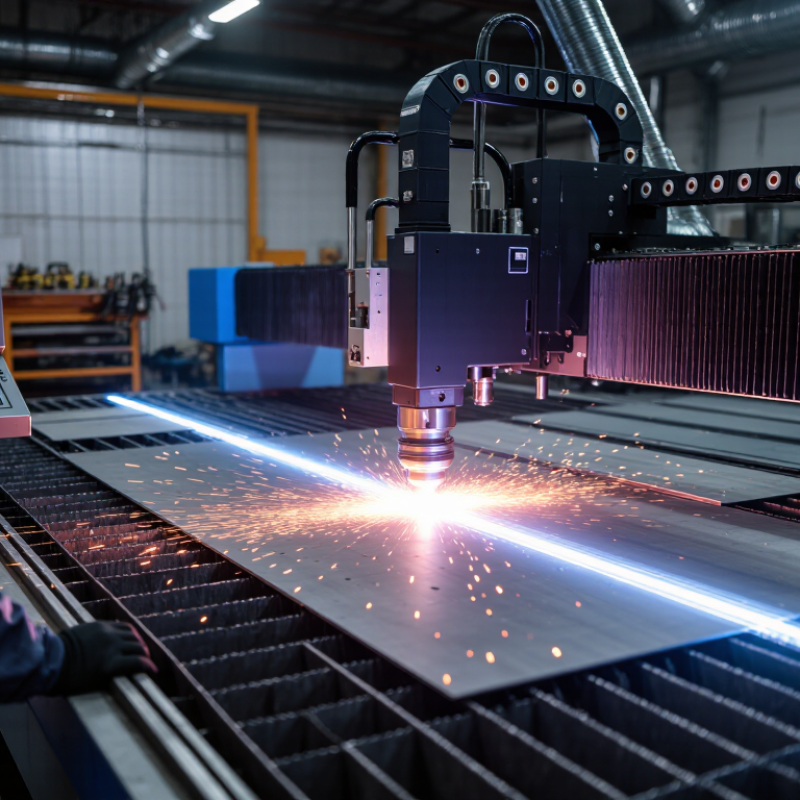
Steel laser cutting uses a concentrated beam of light to melt or vaporize steel along a programmed path. A cutting head directs the beam while a computer-controlled table moves the sheet beneath it. Assist gas, often oxygen or nitrogen, clears molten material from the cut. The gas choice affects edge appearance and cutting behavior. Sharp details matter.
The process can handle carbon steel, mild steel, and stainless steel in sheets or plates. It produces parts such as brackets, panels, enclosures, and machine components, including shapes with small holes or narrow slots. Galvanized steel may also be cut, but its coating needs careful handling and suitable ventilation. Material thickness, surface condition, and machine capacity all influence the result.
A shop typically checks the drawing, steel grade, and thickness before setting power, speed, and focus. Thin sheet can cut quickly, while thicker plate may need slower settings and leave more visible edge marks. Not every edge is perfect. Burrs, heat discoloration, or slight distortion can occur, so tolerances should be confirmed for the actual part and setup. That detail is easy to overlook.
A focused beam melts or vaporizes steel along a programmed path. A computer-controlled table moves the sheet beneath the cutting head.
It can cut carbon steel, mild steel, and stainless steel in sheets or plates. Galvanized steel may also be cut with careful handling and suitable ventilation.
Common parts include brackets, panels, enclosures, and machine components. The process can create small holes and narrow slots.
Steel grade, thickness, and surface condition all matter. A clean, flat sheet often gives a more even edge than rusty or oily steel. Small details matter.
Power, speed, and focus must work together. Excessive speed can leave rough sections, while slow cutting may add heat, burrs, or a wider cut. There is no universal setting.
Oxygen or nitrogen clears molten material from the cut. Gas choice and pressure can affect edge appearance, cleanliness, and dross.
Heat, material condition, or machine settings can leave burrs, discoloration, or slight distortion. Not every edge is perfect.
Check the drawing, steel grade, and thickness, then make a test cut on scrap. Inspect the edge under consistent lighting. One test is not a guarantee; batches and machine condition can change.
Steel Laser Cutting is a process that uses a concentrated beam of light to cut steel into precise shapes and sizes. It can handle different steel types and thicknesses, making it useful for producing components, panels, brackets, and custom parts. A typical system includes a laser source, beam delivery components, a cutting head with a focusing lens and nozzle, a motion-control system, and a worktable. Assist gas may also be used to help clear molten material from the cut.
During cutting, the laser is focused on the steel surface, rapidly heating and melting or vaporizing a narrow area. The cutting head follows a programmed path while assist gas removes material from the kerf, forming the finished edge. Cut quality depends on factors such as material grade and thickness, laser power, cutting speed, focus position, gas pressure, and the condition of the equipment. Common methods include fusion cutting and oxygen-assisted cutting, each suited to different materials and requirements. Steel Laser Cutting is widely applied in fabrication, machinery, construction, automotive components, and other industries where accurate, repeatable steel parts are needed.

 Lxshow