7 Laser Beam Welding Tips for Buyers

Time:2026-11-02 Author:Charlotte
0%

Laser Beam Welding can deliver narrow seams, limited heat distortion, and fast production cycles. Yet these benefits depend on matching the equipment to the part, material, and factory workflow. Buyers should look beyond headline power ratings. Beam quality, joint access, automation, shielding, operator training, and service support all affect the finished weld.

Market forecasts show why careful evaluation matters. MarketsandMarkets’ 2023 Laser Welding Market report estimated growth from USD 2.7 billion in 2023 to USD 4.4 billion by 2028. Grand View Research estimated the global market at USD 2.97 billion in 2023, with a projected 5.8% compound annual growth rate through 2030. These estimates use different methods and scopes, so they are indicators—not buying guarantees. The practical test is a sample weld. Inspect the seam under realistic production conditions.

A bright demonstration is not enough. Ask suppliers to test your actual material thickness, joint design, and production speed. Record penetration, porosity, cycle time, and rework—not just appearance. Also check whether the proposed system fits your floor space and maintenance capacity. A beautiful specification sheet can still hide a poor fit. The following seven tips help buyers compare systems, validate claims, and identify trade-offs before committing. Some compromises will remain; the goal is to understand them before they reach the production line.
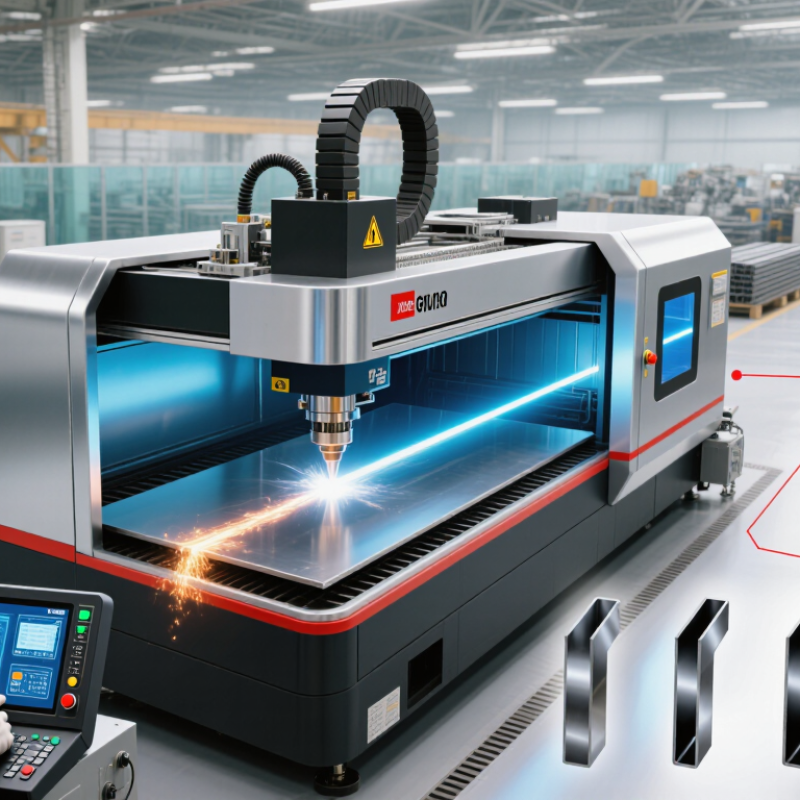
7 Laser Beam Welding Tips for Buyers

Understand Laser Beam Welding and Its Industrial Applications

7 Laser Beam Welding Tips for Buyers

Understand Laser Beam Welding and Its Industrial Applications

Laser beam welding joins materials with a concentrated light beam, creating a small, deep weld with limited surrounding heat. It suits automotive body structures, battery enclosures, electronic components, and precision metal assemblies. The International Energy Agency reported nearly 14 million electric cars sold worldwide in 2023, about 18% of total car sales. That growth increases demand for consistent joining in vehicle structures and battery manufacturing, though it does not make laser welding the right choice for every joint.

Buyers should check material type, thickness, joint fit-up, and production speed before selecting equipment. A narrow beam rewards accurate alignment; small gaps can weaken the result. Ask for sample welds using your actual parts, then inspect penetration, distortion, and repeatability. Also confirm extraction, operator training, and maintenance requirements. They affect real production costs.

Tips: Bring representative parts to a process trial. Compare weld quality at your intended speed, not just the machine’s advertised maximum. Check whether seams are accessible and fixturing is stable. Laser welding can reduce rework, but setup still matters. That part is easy to underestimate. Review the IEA’s Global EV Outlook 2024 for market context, then assess your own application with a qualified welding engineer.

Define Your Materials, Joint Designs, and Production Requirements

Before comparing laser systems, define the material precisely: alloy, thickness, coating, and surface condition. A 0.8 mm stainless sheet behaves differently from a coated steel panel, even when both look similar on the bench. Record acceptable gaps and edge preparation too. A neat drawing can still hide a poor fit-up.

Joint design should match the load path and access available to the beam. Specify lap, butt, or seam geometry, then check whether clamps can hold parts consistently. Thin sections may distort; reflective materials can complicate energy coupling. Do not assume a successful coupon proves a stable production process. Test representative parts, including realistic gaps and surface variation.

Production requirements shape the equipment choice. Define cycle time, shift pattern, changeover frequency, inspection method, and required traceability. The International Federation of Robotics’ World Robotics 2024 report counted 4,281,585 industrial robots operating worldwide in 2023, highlighting how common automated production has become. That figure is not specific to welding, but it makes cell integration worth assessing early. Ask suppliers to demonstrate the proposed process on your parts, with recorded weld parameters and acceptance criteria. Then check whether the result remains consistent across operators and batches. It may not, at first. That is useful information.

Compare Laser Sources, Power Levels, and System Configurations

7 Laser Beam Welding Tips for Buyers
Compare Laser Sources, Power Levels, and System Configurations

Choosing a laser source starts with the material, not the machine’s headline power. Fiber and disk lasers suit many metal-welding tasks, while absorption varies across alloys and surface finishes. A shiny, reflective part may behave differently from a brushed coupon. Ask suppliers to weld samples matching your material, thickness, joint gap, and surface condition.

Tip: Compare the weld, not just the source specification. Inspect penetration, bead width, spatter, and distortion under consistent settings. Keep the test parts. A short demonstration can miss variation between batches.

Power must match both travel speed and joint design. More watts do not automatically mean a stronger weld; excess heat can widen the bead or distort thin sheet. Request a process window showing power, speed, focus position, and shielding-gas settings. Then confirm those settings on production-like parts. Test it first.

System configuration matters just as much. Handheld systems offer flexibility for varied part shapes, but operator technique affects consistency. Automated cells can repeat motion more precisely, though they need suitable fixtures, access, and integration. Check whether the beam-delivery setup reaches the joint without awkward tool angles. I’d also leave room in the evaluation for one inconvenient question: how quickly can the system be adjusted when the real parts differ slightly from the drawings?

Evaluate Automation, Safety Features, and Equipment Compatibility

Automation should be evaluated at the weld cell, not in a brochure. The International Federation of Robotics’ World Robotics 2023 reported 553,052 industrial robot installations worldwide in 2022; its 2024 report recorded 541,302 in 2023. These figures show automation is established, but they cannot predict your line’s payback. Fit matters more.

For safety, ask how the enclosure contains direct and reflected beams. Check door interlocks, beam stops, emergency-stop behavior, and fume extraction. Request test records, not just a feature list. Verify that opening a guarded door disables laser emission, and ask who checks the system after maintenance. Small gaps matter.

Compatibility can decide whether a capable welder becomes an expensive island. Confirm the laser source, focusing optics, robot or motion stage, controller interfaces, cooling, and power supply work together. Test the actual material, joint, and fixture—not only a neat sample coupon. I would not trust a polished demonstration alone; a warped part on a rushed shift can expose problems the demo never showed. Ask for a trial using representative parts, then review cycle time, weld consistency, and changeover steps before buying.

7 Laser Beam Welding Tips for Buyers - Evaluate Automation, Safety Features, and Equipment Compatibility

Buyer Tip What to Evaluate Practical Checks Why It Matters
1. Match the process to the application Material type and grade, part thickness, joint design, weld length, and required production rate. Provide representative parts and drawings for a welding trial. Review weld appearance, penetration, distortion, and any required destructive or nondestructive test results. Laser welding results depend on the material, fit-up, joint geometry, and process settings; a sample trial helps establish whether the proposed process meets the application requirements.
2. Check laser and optical compatibility Laser type and wavelength, rated power, beam delivery, focusing optics, working distance, and available process-head options. Confirm that the source, fiber or other beam-delivery arrangement, and process head are specified to work together. Check that the focal range and access angle suit the part. The equipment must deliver a suitable beam to the joint, while the optics and head must provide the access and focus needed for the planned weld.
3. Assess automation and part handling Manual, robotic, or fixed-head operation; cycle time; fixture design; loading method; and integration with existing controls. Review a complete cycle using representative parts. Verify robot reach and payload where applicable, fixture repeatability, operator access, and signals exchanged with upstream and downstream equipment. Automation performance depends on the whole cell—including handling, fixturing, and controls—not only on the welding source.
4. Verify laser safety provisions Enclosure or guarding, access doors, interlocks, emergency stops, warning indicators, and the system’s intended laser classification. Ask for the safety documentation and risk assessment. Confirm that safeguards are suitable for the installed configuration and that access points are protected during operation. High-power welding lasers can present serious eye and skin hazards. Protective measures should be selected for the actual system, installation, and applicable local requirements.
5. Plan fume and process-gas management Material-specific fumes, extraction approach, filter maintenance, shielding-gas requirements, and gas supply arrangements. Identify the materials and coatings to be welded, then ask for an extraction assessment. Confirm whether shielding gas is required and how flow and supply will be monitored. Fume composition and process needs vary with the material and its surface condition. Extraction and gas arrangements should be based on the intended work.
6. Review quality monitoring and traceability Process monitoring, parameter logging, fault detection, recipe control, and links to the production or quality system. Ask which signals and process values can be recorded, how weld recipes are controlled, and whether alarms or inspection steps can be integrated into the workflow. Monitoring can help identify process interruptions and support production records, but it does not replace qualification or inspection required by the application.
7. Compare support, maintenance, and total cost Installation and training, preventive maintenance, consumables, spare parts, service response, utilities, and planned operating hours. Request a maintenance schedule and itemized operating-cost estimate. Clarify training scope, recommended spares, warranty terms, and service arrangements for the installation location. Purchase price alone does not reflect lifecycle cost or production readiness; support and maintenance affect uptime and the resources needed to operate the system.

Assess Supplier Support, Total Cost, and Long-Term Reliability

A laser welding system is only as useful as the support behind it. Ask who will install the equipment, train operators, and troubleshoot process issues. Get specific. Will a qualified technician review sample welds and recommend settings for your material thickness? How quickly can support respond when production stops? A polished demonstration is helpful, but it does not prove the supplier can solve problems on your shop floor.

Compare the full cost, not just the purchase price. Include installation, operator training, protective equipment, extraction, spare optics, and routine maintenance. Ask for a written list of consumables and their expected replacement intervals. A lower-priced system may need more frequent lens changes or costly downtime. Request a sample weld on your own parts, then inspect penetration, appearance, and repeatability. I would still treat one successful sample cautiously; it may not represent a full shift.

Long-term reliability depends on service access and clear maintenance routines. Check whether common replacement parts are stocked locally and whether the supplier provides a maintenance schedule. Ask what happens if the laser source, scanner, or cooling unit fails. Look for documented safety checks, service records, and training materials your team can actually use. Leave room in the budget for unexpected repairs. Buyers sometimes underestimate this, and I have seen planning spreadsheets miss small but recurring costs.

7 Laser Beam Welding Tips for Buyers

Assess supplier support, total cost, and long-term reliability before choosing a system.

Suggested buyer evaluation weights, totaling 100%. Prioritize weld capability and application trials, then compare service, lifetime costs, reliability, integration, and training. These weights are a practical planning framework, not industry survey results; adjust them to fit your application.

FAQS

What materials and details should buyers define before choosing a laser welding system?

Record the alloy, thickness, coating, and surface condition. A 0.8 mm stainless sheet can behave differently from coated steel. Note acceptable gaps and edge preparation too.

Which joint details affect laser weld quality?

Specify whether the joint is a lap, butt, or seam design. Check beam access and whether clamps hold parts steadily. Small gaps matter.

How can buyers test a system on their parts?

Bring representative production parts, including realistic gaps and surface variations. Inspect penetration, bead width, spatter, and distortion. Keep the sample welds.

Does higher laser power always produce a stronger weld?

No. Excess heat can widen the bead or distort thin sheet. Compare power and travel speed on the actual joint.

What process settings should suppliers document?

Request power, speed, focus position, and shielding-gas settings. Ask for a process window, then check whether results repeat across batches.

How do handheld and automated systems differ?

Handheld systems suit varied shapes, but operator technique affects consistency. Automated cells repeat motion more precisely. Fixtures still matter.

What production requirements should buyers consider?

Define cycle time, shifts, changeovers, inspection, and traceability. Check extraction, training, and maintenance needs. These costs are easy to miss.

What should buyers check during an equipment demonstration?

Test at the intended production speed, not only the advertised maximum. Confirm the beam can reach each seam without awkward angles. Drawings can be optimistic.

Conclusion

Choosing the right Laser Beam Welding system starts with understanding how the process works and where it fits your industrial applications. Buyers should identify the materials they plan to join, the required joint designs, part dimensions, and expected production volume. These details help determine suitable laser sources, power levels, and system configurations, since different combinations can affect weld quality, speed, and process consistency.

Before making a decision, consider how the equipment will integrate with existing production lines and whether its automation and safety features suit the workplace. Compare supplier support, training, maintenance needs, and the availability of replacement components, not just the initial purchase price. Evaluating total ownership costs and expected reliability can help reveal which system is likely to meet production goals over time. A clear assessment of technical requirements and ongoing support makes it easier to select equipment that is practical, dependable, and aligned with long-term manufacturing needs.


Charlotte

Charlotte

Charlotte is a seasoned marketing professional with a deep understanding of the company's portfolio and a passion for elevating its presence in the market. With a keen eye for detail and a commitment to excellence, she ensures that our professional blog is regularly updated with insightful articles......