How to Choose the Best Aluminum Laser Cutting Service

Time:2026-10-18 Author:Sophia
0%

Choosing the best Aluminum Laser Cutting service requires more than comparing hourly prices. Aluminum reflects laser energy, conducts heat quickly, and can develop burrs around small holes. A reliable supplier should understand these reactions before production begins. Ask about alloy experience, including 5052, 6061, and 7075 aluminum. Each grade can respond differently under the same settings.

Dr. Stefan Kaierle, a recognized laser-processing researcher, has emphasized, “Laser material processing depends on controlling energy precisely at the point of interaction.” This principle matters when selecting a cutting partner. A capable service should explain its laser power, assist gas, nozzle design, and tolerance limits clearly. It should also provide test cuts when your design contains narrow slots, sharp corners, or thin walls. Look for practical evidence, not polished promises. Examine sample edges under bright light. Check whether holes remain round and whether protective film survives handling.

Experience matters here. A supplier that cuts decorative panels may not manage aerospace-grade tolerances consistently. Conversely, an industrial shop may overlook a visible surface mark on a consumer product. Define the real requirement before requesting a quote. Include alloy, thickness, quantity, edge expectations, flatness, and delivery schedule. Even small omissions can create expensive revisions.

The cheapest option may not be the best. Sometimes, it is not.

I would also question any provider that refuses to discuss failed trials. Honest manufacturers learn from warped sheets, discolored edges, and incorrect settings. Their willingness to explain limitations strengthens trust. The right Aluminum Laser Cutting partner combines technical control, documented inspection, responsive communication, and a realistic understanding of your finished product.
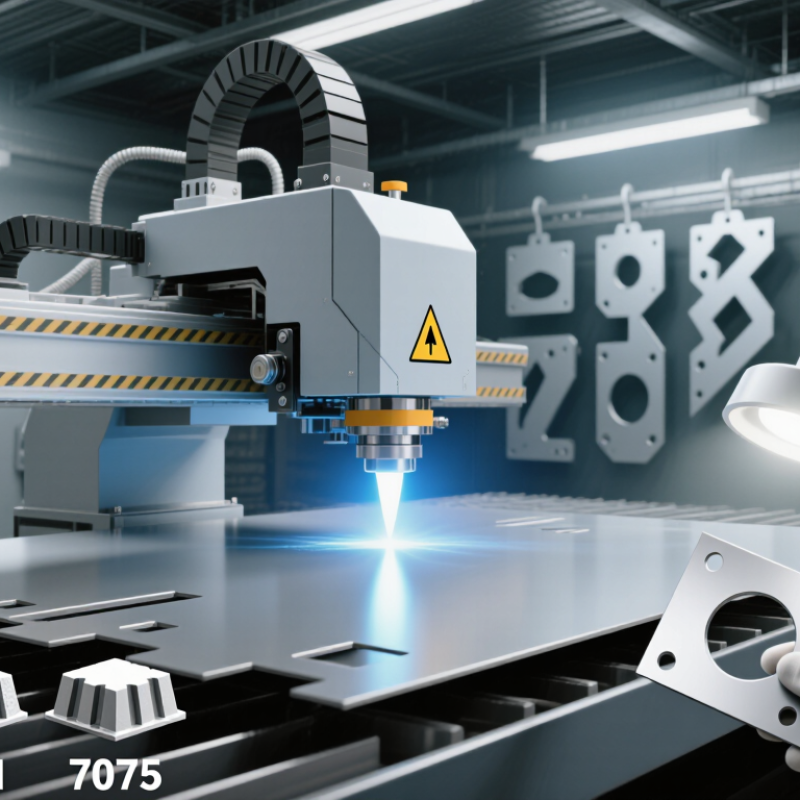
How to Choose the Best Aluminum Laser Cutting Service

Understanding Aluminum Laser Cutting Requirements

How to Choose the Best Aluminum Laser Cutting Service

Understanding Aluminum Laser Cutting Requirements

Choosing an aluminum laser cutting service starts with defining the material clearly. Aluminum is not one uniform material. Its alloy, temper, thickness, and surface condition affect cutting behavior. Softer sheets may develop burrs, while thicker plates can show tapered edges. A reliable service should review these risks before production begins. I once underestimated the effect of protective film. It melted near the cut and created extra cleaning work.

Provide accurate drawings with dimensions, tolerances, hole sizes, and bend allowances. Specify whether the parts need a brushed, anodized, or mill finish. These details help technicians select suitable power, speed, focus, and assist gas settings. Ask how the service controls heat affected zones and prevents scratches during handling. Small holes require special attention. Their diameter should match the material thickness and cutting capability.

Production quantity also matters. A prototype may need careful adjustment, while a large batch requires stable settings and repeatable inspection. Request a sample part when edge quality is critical. Check its flatness, burr level, corner shape, and dimensional accuracy. Confirm the inspection method, measuring tools, and acceptable tolerance range. A service can sound highly capable, yet vague inspection records deserve caution. Even experienced teams can miss a detail when drawings contain conflicting notes. Clear communication reduces that risk.

How to Choose the Best Aluminum Laser Cutting Service

Understanding the thermal conductivity of the selected aluminum alloy helps determine laser power, cutting speed, focal control, and heat-management requirements.

Interpretation: Alloys with higher thermal conductivity transfer heat more quickly, which can require tighter control of laser energy and cutting speed. When requesting a service, provide the exact alloy, thickness, desired edge quality, dimensional tolerance, and surface-finish requirements.

Comparing Laser Cutting Technologies and Material Capabilities

Choosing an aluminum laser cutting service starts with the laser source, not its advertising. Fiber lasers, typically around 1.07 micrometres, transfer energy efficiently to aluminum. CO2 lasers can cut aluminum, but reflection control and maintenance deserve closer questioning. For thin sheet, fiber systems often deliver higher speed and smaller kerfs. Speed alone misleads. A service should provide cut charts, test coupons, and measured tolerances for your alloy and thickness.

Material capability is more than a maximum thickness number. 5052 bends predictably, while 6061 can show edge cracking after cutting and forming. 7075 demands stricter thermal control. Ask whether the shop has processed your temper, not merely your alloy. Nitrogen usually produces a bright edge; oxygen can increase cutting speed but may leave oxide and alter weld preparation. Air is economical, yet its moisture and pressure stability affect dross. The International Aluminium Institute reported about 70.6 million tonnes of primary aluminum production in 2023, underscoring the scale of this material’s industrial use.

Quality checks should reference ISO 9013, including perpendicularity, roughness, and dross limits. A polished sample proves little. Request dimensional results from a full-size part, especially near corners and small holes. The U.S. Department of Energy’s Industrial Decarbonization Roadmap identifies aluminum as an energy-intensive sector, so efficient cutting and low scrap matter beyond the quotation. I would still challenge one assumption: the fastest machine is not always the best choice. A slower trial may reveal distortion, burrs, or a heat-affected edge that photographs conceal.

Evaluating Service Quality, Precision, and Production Standards

Choosing an aluminum laser cutting service requires evidence beyond a polished quotation. Ask for material certificates, sample cut sections, and inspection records. A dependable supplier should state the alloy, thickness, kerf compensation, tolerance, and burr limits. The International Aluminium Institute’s 2024 1.5°C Business Case projects aluminum demand could rise by 80% by 2050. Capacity must support repeatable production, not only fast delivery.

Precision begins with machine condition and process control. Request calibration dates, nozzle replacement rules, assist-gas specifications, and first-article inspection results. ISO 9001:2015 emphasizes controlled processes, documented corrections, and customer-focused quality systems. It does not guarantee perfect parts. That distinction matters. Compare measurement reports with your drawing’s datums, rather than trusting “tight tolerance” claims. ISO Survey data records more than one million ISO 9001 certificates worldwide, but certification alone cannot prove cutting accuracy.

Production standards should remain visible after the first order. Check traceability from sheet heat number to packed parts, revision control, operator training, and nonconformance handling. Visit the production floor when possible. Look for clean nests, protected surfaces, labeled bins, and consistent edges. I would run a small trial batch before committing. It costs time. It may reveal warping, oxide staining, or unstable piercing. No process is flawless. Honest limits can be stronger evidence than an impressive tolerance sheet.

How to Choose the Best Aluminum Laser Cutting Service - Evaluating Service Quality, Precision, and Production Standards

Evaluation Dimension What to Check Practical Benchmark Why It Matters Warning Signs
Material Verification Confirm the aluminum alloy, temper, thickness, sheet size, and material certification requirements before production. The service provider records alloy and temper information and can provide certificates or traceability documents when required. Aluminum alloys have different reflectivity, thermal conductivity, strength, and cutting behavior. The supplier accepts drawings without confirming material grade or thickness.
Laser Equipment Capability Review laser type, rated power, cutting bed size, maintenance program, and suitability for reflective metals. Equipment capacity should comfortably cover the required aluminum thickness and maximum part dimensions, with documented preventive maintenance. Adequate power and properly maintained optics help reduce incomplete cuts, excessive dross, and unstable edges. The provider cannot state equipment limits or relies on one machine for every thickness and alloy.
Dimensional Accuracy Ask how dimensional tolerances are defined, measured, and reported for the specific part size and thickness. A common starting point for laser-cut sheet metal is approximately ±0.10 to ±0.30 mm, subject to material, geometry, thickness, and process conditions. Tight tolerances affect assembly fit, hole alignment, bending allowance, and interchangeability. A supplier promises one universal tolerance without defining measurement conditions or part-size limits.
Edge Quality Inspect sample edges for dross, burrs, striations, discoloration, taper, and heat-affected areas. Edges should be consistent, free from unacceptable attached dross, and suitable for the specified downstream process. Poor edge quality can increase deburring labor, affect safety, and interfere with welding or assembly. Visible heavy dross, rough striations, sharp burrs, or inconsistent results across the same batch.
Hole and Feature Accuracy Evaluate small holes, slots, internal corners, narrow webs, and minimum feature sizes relative to material thickness. The supplier should confirm minimum hole diameter and feature limits instead of applying a single rule to all materials. Small or closely spaced features are more sensitive to heat input, kerf width, and material distortion. The provider accepts very small features without reviewing geometry or proposing design adjustments.
Drawing and File Review Check whether the supplier reviews units, scale, material callouts, bend allowances, tolerances, and revision status. Accepted formats commonly include DXF, DWG, STEP, or other agreed CAD formats, with a controlled revision process. A structured review prevents incorrect scaling, missing dimensions, duplicate contours, and outdated production files. Production begins without written confirmation of drawing revision, units, or material specifications.
Quality Inspection Review inspection equipment, sampling method, first-article inspection, and final inspection records. Useful controls include calibrated measuring tools, documented inspection criteria, and inspection reports matched to the drawing. Documented inspection creates objective evidence that dimensions and appearance meet requirements. Quality is judged only by visual inspection or by an undocumented “pass” statement.
Production Repeatability Compare samples from different production runs and ask how cutting parameters are controlled and recorded. Critical parameters should be standardized by alloy, thickness, nozzle configuration, focus position, and assist-gas settings. Repeatable settings reduce variation between batches and simplify downstream assembly. Results depend on an individual operator with no documented parameter control.
Assist Gas and Surface Protection Confirm the assist gas used, gas purity expectations, pressure control, and protection against scratches or contamination. Gas selection and pressure should be validated for the alloy and thickness; finished sheets should be protected during handling. Gas conditions influence oxidation, edge appearance, cutting stability, and surface cleanliness. Scratched surfaces, uncontrolled oxidation, or unclear gas and handling procedures.
Capacity and Lead Time Evaluate available machine time, material availability, nesting capability, and the supplier’s process for rush orders. A reliable provider gives a written schedule with drawing approval, material procurement, cutting, inspection, and shipping milestones. Clear scheduling helps prevent delays caused by material shortages, overloaded equipment, or late design changes. Only a broad delivery promise is provided, with no capacity or milestone information.
Production Standards and Traceability Ask about documented work instructions, nonconformance control, corrective actions, and batch traceability. A mature process links incoming material, machine settings, inspection results, operator records, and shipment information. Traceability supports root-cause analysis and consistent corrective action if a defect occurs. There is no documented method for handling rejected parts, rework, or recurring defects.
Sampling and First-Article Approval Request a representative sample or first article before releasing a large production order. The sample should verify dimensions, holes, edge condition, surface protection, and packaging requirements. Early validation reduces the cost and schedule impact of design or process errors. The supplier discourages sampling or cannot provide measurable acceptance criteria.
Packaging and Delivery Condition Review separators, protective film requirements, moisture protection, labeling, and packaging for sharp edges. Packaging should prevent scratching, bending, contamination, and part mixing during transport and storage. A correctly cut part can still become unusable through poor handling or inadequate protection. Parts arrive mixed, unprotected, scratched, wet, or without clear identification.
Total Cost and Value Compare material utilization, cutting time, setup charges, finishing, inspection, packaging, shipping, and expected rework. Choose the quotation with transparent assumptions and measurable quality commitments rather than the lowest unit price alone. Low prices may be offset by scrap, rework, delayed assembly, extra deburring, or inconsistent quality. The quotation omits material grade, tolerance, inspection scope, revision control, or delivery conditions.

Note: Actual tolerances, minimum feature sizes, cutting thickness, edge quality, and lead times depend on the aluminum alloy, temper, thickness, part geometry, equipment, process parameters, and inspection method. Final requirements should be agreed in the approved technical drawing and purchase specification.

Reviewing Pricing, Lead Times, and Customization Options

Choosing an aluminum laser cutting service starts with a detailed price review. Ask whether the quote includes material, programming, setup, deburring, packaging, and delivery. A low unit price may hide expensive setup fees. Request an itemized quotation. Compare the same aluminum grade, thickness, quantity, and tolerance across suppliers. For repeated orders, ask about nesting efficiency and material waste. These details can change the final cost more than expected.

Lead time deserves equal attention. Confirm the production schedule, inspection time, and shipping window separately. Ask what happens if raw material arrives late. A reliable service should provide measurable dates, not vague promises. For example, a prototype may require three working days, while a batch of complex panels needs two weeks. Build in a small buffer. Tight deadlines often expose weak planning.

Customization should match the actual part design. Discuss hole diameters, edge quality, bend allowances, surface requirements, and allowable tolerances before cutting begins. Send a drawing with revision numbers. This prevents an old file from entering production. Ask for a first-article inspection report, especially when parts must fit an assembly. Photos can reveal obvious defects, but they cannot replace dimensional checks. I would also question unusual claims. Perfect accuracy at every thickness may sound attractive, yet real performance depends on machine condition, operator skill, and aluminum alloy. That is where careful review matters.

Selecting a Reliable Aluminum Laser Cutting Partner

Choosing a reliable aluminum laser cutting partner requires more than comparing hourly rates. Ask how the shop verifies alloy, thickness, and temper before cutting. Material certificates, batch tracking, and documented inspection create confidence. ISO 9001 certification can support this process, but certification alone is not proof of excellent work.

Request a sample cut using your actual aluminum grade. Examine edge dross, burrs, heat discoloration, corner accuracy, and hole roundness under good lighting. A dependable supplier should explain its laser power, assist gas, kerf compensation, and tolerance limits.

The International Aluminium Institute projects aluminum demand to increase from about 95 million tonnes in 2020 to roughly 179 million tonnes by 2050.

That pressure makes stable production and material efficiency increasingly important. Ask for measurable evidence. Useful records include first-article inspection reports, calibration dates, nonconformance rates, and delivery performance.

The World Bank’s Commodity Markets Outlook has repeatedly identified aluminum as sensitive to energy costs, so energy management can affect pricing and continuity.

Do not accept vague promises. Request a written quotation with tolerances, finishing requirements, packaging details, and revision control.

Small details matter. One overlooked protective-film requirement can leave scratches across an entire batch.

I would also question suppliers that never discuss failure handling. Even experienced teams make mistakes; reliable partners explain how they detect, correct, and prevent them.

FAQS

Which laser source is usually suitable for aluminum cutting?

Fiber lasers often cut aluminum efficiently at around 1.07 micrometres. They usually suit thin sheets. CO₂ systems can also work, but reflection control requires careful review. Ask for test coupons and measured results.

Why should I test the exact aluminum alloy and temper?

Different alloys behave differently during cutting and forming. One alloy may bend cleanly, while another may crack near the edge. Some tempers need tighter thermal control. The alloy name alone is not enough.

Which assist gas should be used for aluminum?

Nitrogen usually creates a brighter, cleaner edge. Oxygen may increase cutting speed but can leave oxide on the surface. Air costs less, but moisture can increase dross. The cheapest gas is not always practical.

How can I judge cutting quality?

Request results for perpendicularity, roughness, dross, and dimensional tolerance. Inspect a full-size part, not only a polished sample. Check corners and small holes closely. Photos can hide defects.

What information should an aluminum cutting quotation include?

Ask whether the price includes material, programming, setup, deburring, packaging, and delivery. Request an itemized quotation. A low unit price may hide setup charges. That detail matters.

How can I compare suppliers fairly?

Compare identical alloy, thickness, quantity, tolerances, and surface requirements. For repeat orders, ask about nesting and material waste. Scrap can change the final cost significantly. I would verify the calculation myself.

How should production lead time be confirmed?

Separate the production, inspection, and shipping dates. Ask what happens if raw material arrives late. A prototype might take three working days. Complex panels may need two weeks.

What design details should be discussed before cutting?

Confirm hole diameters, edge quality, bend allowances, surface needs, and tolerances. Send drawings with revision numbers. This helps prevent an outdated file from entering production. That mistake is easy to miss.

Is the fastest cutting machine always the best option?

No. A slower trial may reveal distortion, burrs, or heat-affected edges. Machine condition and operator skill also influence results. Perfect accuracy at every thickness sounds doubtful. Measured evidence is safer.

Conclusion

Choosing the best Aluminum Laser Cutting service begins with clearly defining your project requirements, including material grade, thickness, dimensions, tolerances, surface finish, and expected production volume. Different laser technologies offer varying levels of speed, accuracy, edge quality, and material capability, so it is important to select a provider with equipment suited to your aluminum specifications. A capable service should also demonstrate strong quality control, consistent precision, trained operators, and production standards that support reliable results from prototypes to larger orders.

Beyond technical performance, evaluate pricing, lead times, and customization options carefully. Transparent quotations should explain material costs, programming, finishing, packaging, and any additional services. Flexible providers can accommodate unique shapes, complex designs, changing quantities, and special delivery requirements without sacrificing quality. Finally, choose a dependable partner by reviewing communication, production capacity, inspection procedures, and past performance. The right Aluminum Laser Cutting provider should combine technical expertise, responsive service, predictable scheduling, and consistent workmanship to help your project remain efficient and cost-effective.


Sophia

Sophia

Sophia is a dedicated marketing professional with an exceptional depth of knowledge about her company's products and services. With a keen understanding of market trends and customer needs, she crafts insightful blog posts that not only inform but also engage readers, enriching the company’s online......