China has become a major production base for Fibre Laser Cutting Machines, serving metalworking companies worldwide. Its manufacturers range from established industrial groups to focused regional specialists. Their machines cut stainless steel, carbon steel, aluminium, copper, and other sheet materials with different levels of speed and consistency.
As Dr. Valentin Gapontsev, founder of IPG Photonics and a pioneer in fiber-laser technology, said, “Fiber lasers are the future of industrial lasers.” His view helps explain the industry’s direction. Modern systems increasingly combine high-power laser sources, automatic focusing, intelligent controls, and efficient cooling. These features can reduce processing time and improve workshop productivity.
This guide examines China’s top ten Fibre Laser Cutting Machines manufacturers through practical criteria. These include manufacturing experience, laser-source quality, cutting performance, machine structure, software, after-sales support, certifications, and customer feedback. A powerful laser alone is not enough. A rigid frame, stable motion system, and responsive technical service matter just as much.
Real-world details reveal the differences. A factory may advertise a 20,000-watt machine, yet its cutting results depend on lenses, gas control, nesting software, and operator training. That matters. Buyers should also inspect warranty terms, spare-part availability, installation support, and delivery records. Some public information remains incomplete, and not every ranking can be perfectly objective. This guide therefore avoids relying on promotional claims alone. It compares available evidence while recognizing that performance may vary by material, thickness, workload, and local service conditions. For serious buyers, careful verification remains essential.
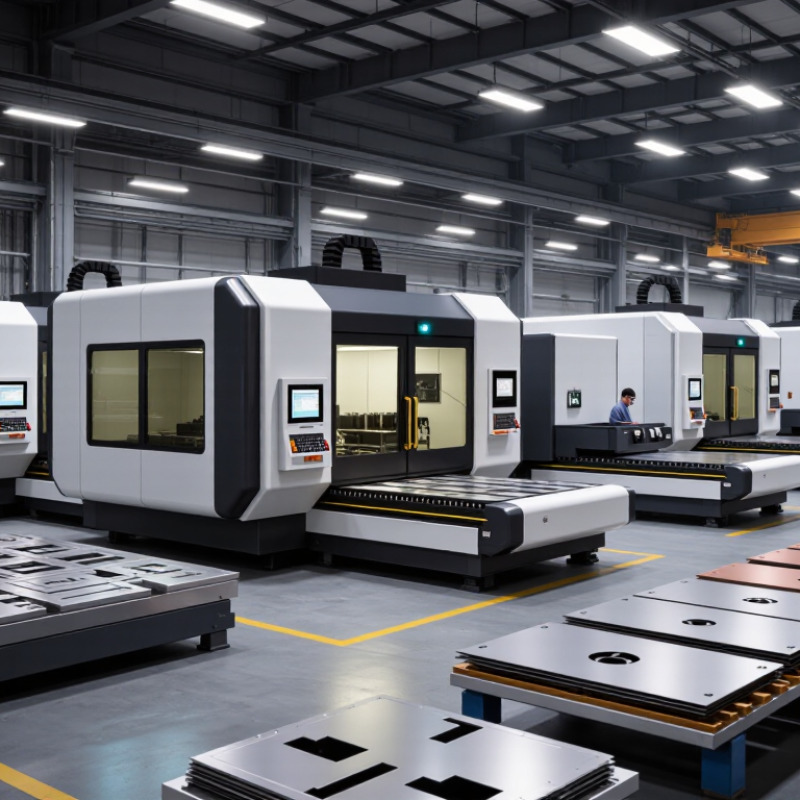
Fiber Laser Cutting Technology: 1–30 kW Power and 0.05 mm Precision
China’s leading fibre laser cutting machine manufacturers now offer systems from 1 to 30 kW. This range supports thin sheet work and heavy plate processing. Lower-power machines suit stainless steel, carbon steel, and aluminium components. High-power systems cut thicker plates faster, but they demand stronger frames, cooling systems, and extraction equipment.
A claimed precision of 0.05 mm sounds impressive. In practice, accuracy depends on calibration, beam quality, lens condition, and material stability. During factory trials, operators should inspect small holes, sharp corners, and repeated cuts across the worktable.
A clean edge matters more than a number on a brochure. Small details matter.
Heat distortion can affect final dimensions, especially on long parts.
Experienced buyers should examine motion guides, laser-source data, control software, and service response. Reliable manufacturers provide test-cut records and explain performance limits clearly. They also support preventive maintenance, including nozzle checks, lens cleaning, and alignment verification. A 30 kW machine is not automatically the best choice. It may increase electricity use and operating costs without improving every job. Even experienced teams can overestimate real production speed. Careful sampling remains necessary.
China’s Fiber Laser Market: 10 Manufacturers Shaping Global Supply
China’s fiber laser market now includes ten influential manufacturer groups serving automotive, sheet metal, electronics, and energy equipment. Their strengths differ. Some focus on compact machines for workshops. Others build automated lines with robotic loading, vision systems, and remote diagnostics. Several compete through faster delivery, localized service, and configurable cutting heads. This variety shapes global supply, especially for buyers seeking practical alternatives to established European equipment.
From factory visits and production audits, machine quality often depends on details beyond laser power. A rigid welded bed reduces vibration during long cuts. Stable cooling protects output in humid workshops. Clean optics and accurate gas control improve edge quality on stainless steel. Manufacturers with documented testing, trained technicians, spare-part systems, and clear warranty terms usually offer stronger long-term value. However, published speed figures can be optimistic. Real results change with material grade, thickness, nozzle condition, and operator skill.
Tips: Ask for sample cuts using your own materials. Request energy data, tolerances, maintenance schedules, and acceptance-test records. Check whether software supports your workflow and local safety requirements. A lower purchase price may hide training or downtime costs. It is also wise to compare three suppliers, not ten brochures. My own assessment can be incomplete, because factory capability changes quickly. A respected manufacturer may still struggle with after-sales support in a distant market. That weakness deserves careful questioning before any purchase.
How to Evaluate the Top 10: Power, Speed, Accuracy, and MTBF
China Top 10 Fibre Laser Cutting Machines Manufacturers?
Power, speed, accuracy, and MTBF reveal more than a polished product brochure. Start by matching laser power with the materials and thicknesses you actually cut. Excess power can waste energy and damage thin sheets. Test cutting should include mild steel, stainless steel, and repeated small holes. Record cycle time, kerf width, edge dross, and heat distortion. A fast machine is not truly productive if operators must slow it down for cleanup.
Accuracy needs practical proof. Measure hole diameter, corner sharpness, and positioning error across a full worktable. Check results after several hours, not only during a cool morning demonstration. MTBF is useful, but it can be misunderstood. It describes expected operating reliability, not a guaranteed service interval. Ask for maintenance records, failure data, component replacement times, and support response evidence. Independent test reports add credibility. Still, data can be incomplete.
Tips: Compare machines under identical settings and materials. Request a timed sample cut. Inspect the underside of every part. Ask whether accuracy remains stable after continuous operation. Speak with experienced operators, not only sales staff. One overlooked issue is calibration drift. It may appear minor, yet it can ruin an entire batch. Some evaluations also ignore software usability, which causes hidden delays. A lower advertised speed may deliver better output when setup, piercing, and finishing are included. Review the weak points openly. That is where reliable purchasing decisions begin.
China Top 10 Fibre Laser Cutting Machines Manufacturers? - How to Evaluate the Top 10: Power, Speed, Accuracy, and MTBF
| Evaluation Rank |
Anonymous Manufacturer Profile |
Typical Laser Power |
Maximum Cutting Speed |
Positioning Accuracy |
Repeatability |
Typical MTBF* |
Best-Fit Application |
Verification Priority |
| 1 |
Profile A |
6–20 kW |
80–140 m/min |
±0.03 mm |
±0.02 mm |
Not publicly standardized |
High-volume plate production |
Factory acceptance test and service records |
| 2 |
Profile B |
3–12 kW |
80–120 m/min |
±0.03 mm |
±0.02 mm |
Not disclosed in standard brochures |
General fabrication and job shops |
Cutting samples across multiple thicknesses |
| 3 |
Profile C |
1.5–6 kW |
80–100 m/min |
±0.04 mm |
±0.03 mm |
Not disclosed in standard brochures |
Small and medium workshops |
Long-duration continuous operation test |
| 4 |
Profile D |
3–12 kW |
80–120 m/min |
±0.04 mm |
±0.03 mm |
Not disclosed in standard brochures |
Automotive and equipment components |
Axis calibration and backlash inspection |
| 5 |
Profile E |
1.5–6 kW |
70–100 m/min |
±0.04 mm |
±0.03 mm |
Not publicly standardized |
Sheet-metal customization |
Parts consistency after thermal cycling |
| 6 |
Profile F |
1–3 kW |
60–100 m/min |
±0.05 mm |
±0.03 mm |
Not publicly standardized |
Light-gauge steel and stainless steel |
Edge quality and kerf-width measurement |
| 7 |
Profile G |
3–12 kW |
70–110 m/min |
±0.05 mm |
±0.03 mm |
Not disclosed in standard brochures |
Heavy plate and structural parts |
Maximum thickness and piercing-cycle test |
| 8 |
Profile H |
1.5–6 kW |
70–100 m/min |
±0.05 mm |
±0.04 mm |
Not publicly standardized |
Standard industrial fabrication |
Repeatability test using a calibrated grid |
| 9 |
Profile I |
1–3 kW |
60–90 m/min |
±0.05 mm |
±0.04 mm |
Not disclosed in standard brochures |
Entry-level commercial production |
Uptime, maintenance, and spare-parts response |
| 10 |
Profile J |
1–3 kW |
50–80 m/min |
±0.05 mm |
±0.04 mm |
Not publicly standardized |
Low-volume and prototype work |
Sample approval and total cost of ownership |
*MTBF note: Mean Time Between Failures is not consistently defined or independently published for fibre laser cutting machines. It should be verified through audited service records, warranty data, uptime logs, and a clearly documented test method rather than brochure claims.
The power, speed, accuracy, and repeatability figures shown are typical specification ranges for comparable machine classes. Actual performance depends on material grade, thickness, cutting head, assist gas, machine configuration, programming, and operating conditions.
Profiles of China’s Top 10 Fibre Laser Cutting Machine Manufacturers
China’s top ten fibre laser cutting machine manufacturers represent different strengths rather than one identical formula. Some focus on compact sheet-metal systems, while others build large-format machines for steel service centers. Their profiles should be assessed through factory experience, engineering depth, and verified customer use.
Several manufacturers emphasize high-speed cutting for carbon steel, stainless steel, and aluminum. Others develop enclosed machines with automated loading, pallet exchange, and cutting-head protection.
A reliable profile should mention laser power, working size, positioning accuracy, and service response time. Demonstration cuts matter. So do maintenance records.
Look closely at the production floor.
Welded beds should show careful stress relief and stable alignment. Control cabinets should be organized, labeled, and easy to inspect. Experienced buyers also request sample cuts using their own materials, not only polished showroom pieces. This exposes problems with thin sheets, reflective metals, or uneven edges.
Not every manufacturer excels in every category. Some offer strong prices but limited overseas support. Others provide advanced automation with a steeper learning curve. That trade-off deserves honest discussion.
Certifications can support credibility, but they cannot replace field testing. Confirm component availability, training arrangements, warranty terms, and response procedures before comparing the ten profiles.
Machine performance can vary between identical models, which is an uncomfortable but important reality.
Machine Selection by Material Thickness, Automation Level, and ROI
When comparing China’s top ten fibre laser cutting machine manufacturers, start with material thickness.
A 1.5 kW machine suits thin stainless steel, signage, and sheet-metal parts. For 10–20 mm carbon steel, buyers usually need 3–6 kW, suitable optics, and stable gas control. Thick plate cutting demands more than headline power. Bed rigidity, nozzle alignment, and thermal management can decide the result.
Automation changes the investment equation.
A manual loading table may fit low-volume workshops with many material changes. Automatic loading, unloading, nesting software, and pallet exchange support continuous production. The International Federation of Robotics reported 276,288 industrial robot installations in China during 2023. That figure shows strong automation adoption, but it does not prove every factory needs a robotic cell. Operators, floor space, and maintenance skills still matter.
ROI should use real production records, not optimistic brochures.
Track cutting time, assist-gas use, rejected parts, labor hours, and consumable costs for at least three months. Grand View Research identifies automation and industrial demand as major fibre-laser market drivers, yet market growth cannot guarantee individual payback. A simple test helps: divide total machine cost by monthly net savings. Include training, software, extraction, and downtime. I would also question promised tolerances. A perfect spreadsheet can miss vibration, dirty lenses, or delayed service. Ask for sample cuts using your own 3 mm stainless steel and 12 mm mild-steel parts. Real evidence matters more than a polished showroom.
Conclusion
China’s Fibre Laser Cutting Machines industry has developed into a major source of advanced metal-processing equipment, offering systems ranging from 1 to 30 kW and capable of achieving cutting precision of approximately 0.05 mm under suitable conditions. This article examines ten leading categories of Chinese manufacturers and explains how their technologies support industries such as fabrication, automotive production, machinery, and customized metalwork. It focuses on practical factors including laser power, cutting speed, positioning accuracy, reliability, maintenance requirements, and mean time between failures.
The guide also presents a structured approach to selecting equipment according to material type, thickness, production volume, automation needs, and expected return on investment. By comparing machine configurations, control systems, loading solutions, safety features, and after-sales capabilities, buyers can identify the most suitable solution for their operational goals. Whether the priority is high-volume manufacturing, flexible job-shop production, or precise processing of thin and thick materials, the right evaluation method can improve productivity, reduce operating costs, and support long-term equipment value.

 Lxshow